
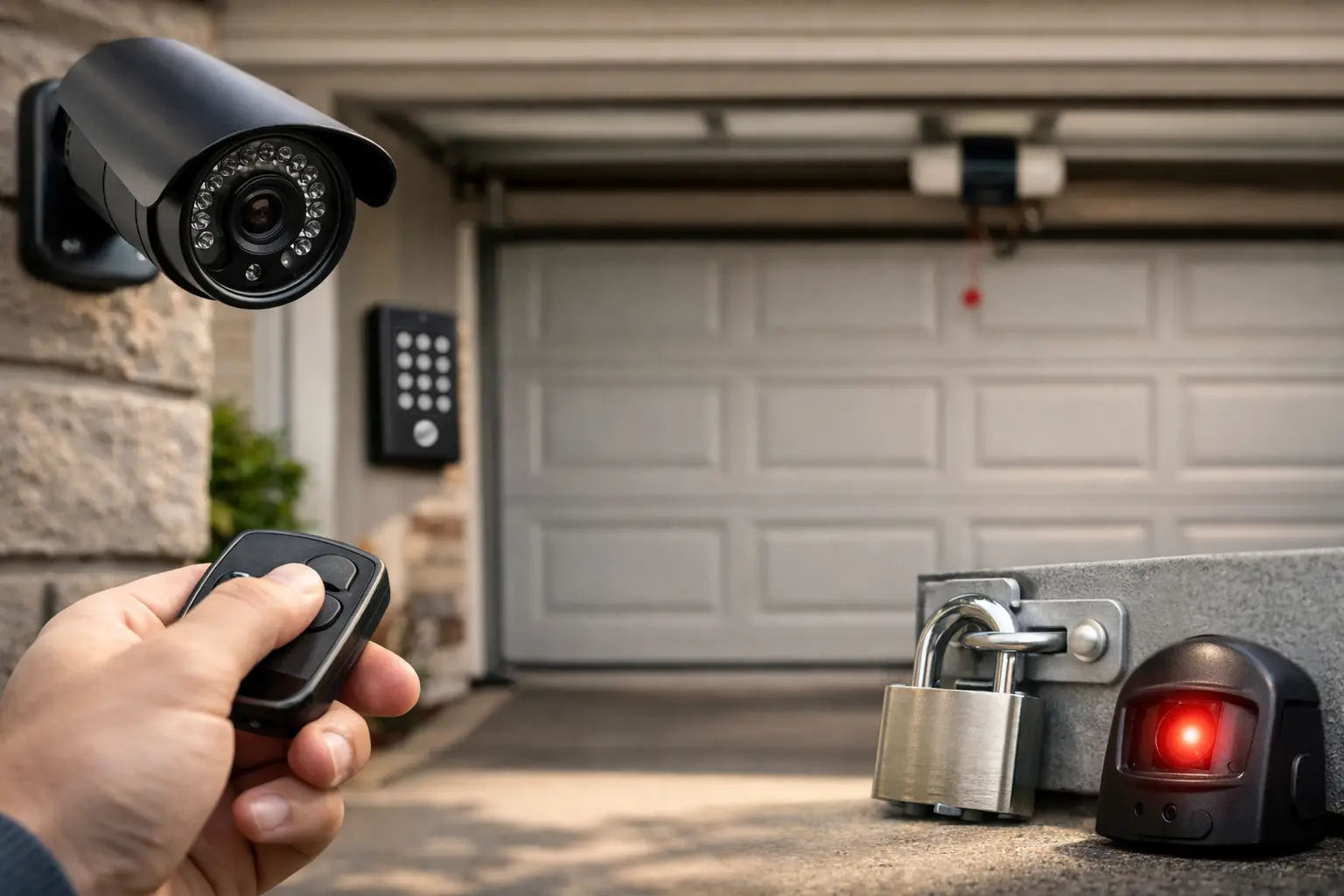
7 Best Garage Door Security Upgrades for Homes
A garage door is often the largest moving entry point in a home, and it can be an easy target when its security features are outdated or its hardware is not working correctly. The best garage door security upgrades do more than add a new gadget. They eliminate weak points, confirm the door closes fully, and give you better control over who can enter your garage.
For Houston-area homeowners, this matters for more than theft prevention. A garage often connects directly to the home, stores valuable tools and equipment, and may be used as a daily family entrance. Stronger security starts with a door that operates safely and reliably, then adds the right layers of access control for your household.
Start With the Security Problems You Already Have
Before buying an accessory, take an honest look at the garage door itself. A smart opener cannot compensate for a door that leaves a visible gap, a damaged bottom seal, a bent track, or a weak lock. Likewise, a heavy-duty lock will not help much if an intruder can manually lift the door because the opener is disengaged or the door is out of balance.
Stand outside after dark and look for daylight around the perimeter. Test whether the door closes flush with the floor. Check that the rollers stay in the tracks, the panels are solid, and the opener reverses when it should. If the door shakes, binds, stops short, or opens unevenly, address that repair first. Reliable operation is the foundation of garage security.
A professional inspection is especially worthwhile after a vehicle impact, a severe storm, a broken spring, or an off-track door. These problems can create security gaps that are not obvious from the driveway.
Best Garage Door Security Upgrades to Consider
The right upgrades depend on the age of your opener, whether the garage is attached, how often you travel, and what is stored inside. Most homes do not need every option. The goal is to build practical protection around the risks you actually have.
1. Upgrade to a modern smart garage door opener
A modern opener with secure rolling-code technology is one of the most valuable improvements for many homes. Older openers may use fixed codes that are easier to copy or may lack the safeguards available in current systems. Newer models create a different access code each time the remote is used, reducing the risk of code theft.
Smart features add visibility and control. Depending on the opener, you may receive an alert when the door opens or closes, check its status from your phone, and close it remotely if someone leaves it open. This is particularly useful for busy families, rental properties, and homeowners who travel frequently.
Convenience should not replace good habits. Protect the account connected to the opener with a strong, unique password and two-factor authentication when available. Remove access for former tenants, contractors, or household members who no longer need it. If you are replacing an older unit, choose a quality opener installed and programmed correctly rather than selecting solely on app features.
2. Add a manual slide lock for travel or extended absences
A slide lock is a simple physical barrier mounted on the inside of the door. When engaged, it slides into the track and prevents the garage door from being opened. It is a sensible low-cost option when you will be away for several days or when a vacation home is unoccupied.
There is one major trade-off: the lock must be disengaged before using the automatic opener. Trying to run the opener while the slide lock is engaged can damage the door, opener, or track. For that reason, it works best as an occasional security measure, not as the everyday solution for a garage used several times a day.
If your door already has a lock that is bent, loose, or difficult to operate, have it repaired rather than forcing it. A damaged lock can interfere with normal door movement and create a safety concern.
3. Reinforce the door and its hardware
Garage door strength matters. Thin, damaged, or poorly supported panels can be more vulnerable to forced entry, especially near the bottom section. Reinforcement struts, quality hinges, properly secured tracks, and a solid center stile help the door resist flexing and keep it moving correctly.
This is not a one-size-fits-all upgrade. A single-car steel door may need a different solution than a large insulated double door, a custom wood door, or a commercial sectional door. Added hardware also changes the weight and movement of the system, so springs and opener force settings may need adjustment.
Do not overlook the bottom brackets, cables, and track mounting points. These parts are under significant tension and should be handled by a trained technician. Tightening the wrong component can cause injury or make an existing problem worse.
4. Secure the emergency release without disabling it
The emergency release is essential for safety. It allows you to disconnect the door from the opener during a power outage or mechanical failure. Unfortunately, on some older setups, someone may be able to manipulate the release from outside through the top of the door.
A properly designed emergency-release shield or guard can reduce that risk while preserving the release for someone inside the garage. Avoid makeshift methods that tie up, remove, or permanently disable the release cord. During an emergency, you need a safe way to operate the door manually.
The best approach is to have the opener, top section of the door, and release mechanism evaluated together. The correct solution depends on clearance, door style, opener rail placement, and how the garage is used.
5. Improve exterior lighting and camera coverage
Security is stronger when a person approaching the garage is visible before they reach the door. Motion-activated lighting near the driveway, side access, and garage-to-yard path can discourage unwanted activity and make it easier for your cameras to capture useful footage.
Place cameras to cover the driveway approach and any service door, not just a close-up view of the garage door panel. A camera should help answer practical questions: Who arrived? Did the door close? Was a package delivered? Did someone enter through a side door?
Lighting and cameras are deterrents, not substitutes for a secure door. They work best alongside a reliable opener, maintained hardware, and locked pedestrian doors.
6. Protect the garage entry door too
Many break-ins happen through the side service door or the door connecting the garage to the house, not through the overhead door itself. Treat both as critical entry points.
The exterior service door should have a quality deadbolt, reinforced strike plate, long screws anchored into framing, and a solid frame. The door between the garage and home should close and latch securely every time. Keep that interior door locked when practical, especially if the garage is accessible from outside.
Also avoid leaving the garage remote in an unlocked vehicle parked in the driveway. If someone gets into the vehicle, they may have immediate access to the garage. A keychain remote, a secured smart opener app, or a locked glove compartment is usually a better choice.
7. Repair gaps, damaged panels, and worn weather seals
A gap at the bottom or side of a garage door may seem like a weather issue, but it can become a security issue too. Gaps can provide enough space for someone to see inside, reach tools toward the emergency release, or gain leverage on a weak door.
Replace worn bottom seals and perimeter weatherstripping, but do not assume fresh weather seal will fix every gap. If the door is crooked, the track is loose, the floor is uneven, or a panel is damaged, the underlying cause needs attention. A properly adjusted door should sit evenly and close with a consistent seal.
Do Not Forget Everyday Security Habits
Even the best equipment can be undermined by a door left open overnight. Make closing the garage part of your evening routine, and consider enabling automatic close settings if your opener supports them. Use that setting thoughtfully if children, pets, or active driveway traffic are common around your home.
Keep ladders, tools, and garage remotes out of sight. A visible ladder can give someone access to upper windows, while unsecured tools can be used to force entry. For homeowners with a keypad, update the code after a move, a contractor project, or any change in household access.
For property managers and commercial operators, access should be reviewed on a schedule. Delete old user codes, inspect loading-area doors, and make sure employees know how to report a door that does not close correctly. Small operating issues can quickly turn into an access-control problem.
When to Call a Garage Door Professional
Call for service promptly if the door will not close all the way, reverses without an obstruction, has a broken panel, makes grinding noises, or can be lifted manually when it should be secured. These are not problems to ignore until the next convenient time.
Ranger Garage Door Repair helps homeowners across Greater Houston identify the upgrades that make sense for their door, budget, and daily routine. The recommendation should be clear: repair what is compromised, upgrade what adds real value, and avoid paying for features you will not use.
A secure garage should not require guesswork. If something about your door feels loose, unreliable, or easy to bypass, have it checked before it becomes the point of entry you wish you had addressed sooner.


