
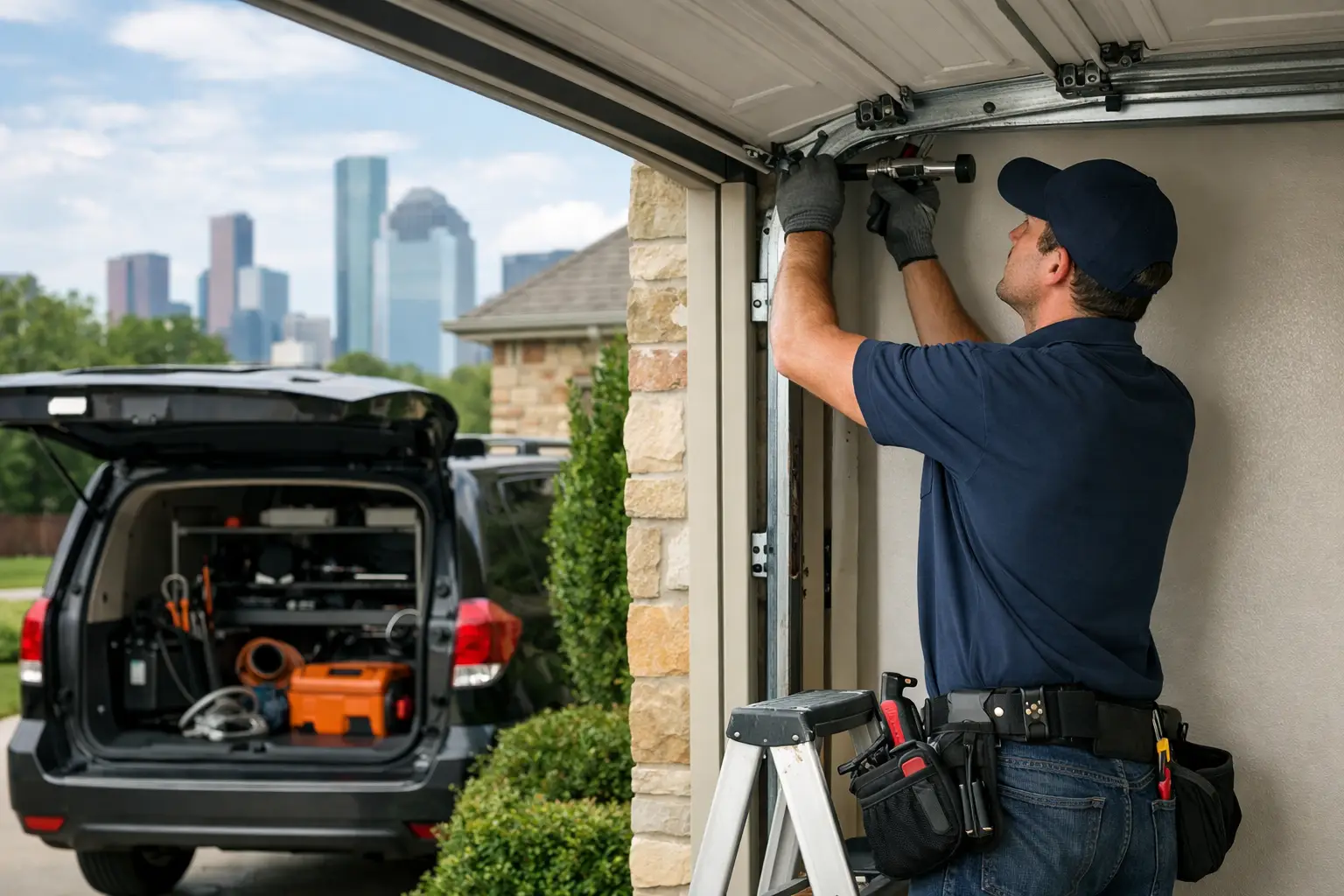
Garage Door Repair Houston Homeowners Can Trust
A garage door can fail at the worst possible moment: when you are leaving for work, getting children to school, or trying to secure your home for the night. For garage door repair Houston homeowners can rely on, the first priority is not a quick guess or a temporary workaround. It is identifying what failed, protecting everyone nearby, and restoring safe, dependable operation.
Houston garage doors work hard. Heat, humidity, heavy rain, wind, and daily use all take a toll on springs, rollers, openers, cables, and the door itself. A problem that begins as a little extra noise can turn into a stuck door, a damaged vehicle, or a security concern if it is ignored too long.
Know the Difference Between a Minor Issue and a Safety Risk
Not every garage door concern requires an emergency visit, but some symptoms should never be treated as a do-it-yourself project. Garage doors are heavy, and their counterbalance systems store substantial force. The goal is to recognize the warning signs early, then make a safe, informed decision.
A door that squeaks briefly may simply need professional lubrication or an adjustment. A door that slams shut, hangs crookedly, or will not open more than a few inches is a different matter. Stop using it until a trained technician can inspect the system.
A loud bang usually points to a broken spring
Many homeowners first notice a broken torsion spring because of a sharp bang from the garage. The sound can be alarming, but it is usually the spring breaking rather than the door itself falling. Once a spring breaks, the opener may hum or strain while the door barely moves.
Do not keep pressing the opener button to see whether it will “catch.” The opener is designed to move a balanced door, not lift its full weight. Repeated attempts can damage the motor, gear assembly, or rail and turn a spring replacement into a larger repair.
Spring replacement is not a job for general household tools. Correct spring sizing, secure installation, and precise tensioning are essential to safe operation. A properly repaired door should lift smoothly and remain balanced at about the halfway point when tested by a professional.
A crooked or off-track door needs immediate attention
If one side of the door is lower than the other, a cable may have come off its drum or a roller may have left the track. You may see a gap between the roller and track, loose cable near the upper corner, or panels sitting at an angle.
At that point, stop the door and keep people clear of the opening. Pulling on a cable or forcing the opener can make the door bind harder and may bend tracks, damage panels, or cause the door to shift unexpectedly. An off-track repair should include more than putting the roller back in place. The technician should find out why it happened, whether from worn rollers, damaged track alignment, a broken cable, an obstruction, or an impact.
Common Houston Garage Door Problems and What They Mean
Houston’s climate does not cause every repair, but it can speed up normal wear. Humidity can contribute to corrosion on hardware, summer heat can expose weak opener components, and storm debris can interfere with tracks and photo-eye sensors. Regular use remains the biggest factor, especially for doors that open and close several times a day.
A door that moves slowly or shakes may have worn rollers, loose hinges, dry bearings, or a balance issue. A grinding sound can point to damaged rollers or a problem inside the opener. A single loud pop or repeated snapping sound can be related to springs, cables, or hardware under tension.
When the opener runs but the door does not move, the issue may be a broken spring, stripped internal gear, disconnected trolley, or failed drive component. When the door reverses before closing, first check for objects in the opening and wipe the photo-eye lenses. If the sensors are clear and properly aligned but the problem continues, the door may need force, travel-limit, or hardware adjustments.
These symptoms can overlap, which is why a proper inspection matters. Replacing the part that looks worn without checking the full system can leave the underlying issue unresolved.
What You Can Safely Check Before Calling for Service
There are a few safe checks homeowners can make without disassembling anything. Look for boxes, tools, or debris in the door’s path. Confirm that the photo-eye sensors near the floor have clear lenses and are facing each other. Check whether the wall control has power and whether the opener has been unplugged or tripped a breaker.
You can also listen and observe. Does the door make noise at one specific point? Does it stop unevenly? Is a spring visibly separated? Is a cable loose? Clear observations help a technician arrive prepared, but they are not a reason to remove brackets, loosen screws near the springs, or pull on cables.
Avoid spraying random products on every moving part. Heavy grease can collect dirt, and some products are not suited for garage door components. Maintenance is valuable when it is done correctly: appropriate lubrication, fastener checks, roller and hinge inspection, balance testing, safety sensor testing, and opener review.
Repair or Replace? The Honest Answer Depends
A repair is often the right choice when the door itself is structurally sound and the problem is isolated. Broken springs, worn rollers, damaged hinges, sensor issues, and many opener problems can usually be addressed without replacing the entire door.
Replacement deserves consideration when panels are severely damaged, the door has widespread rust or deterioration, parts are obsolete, or repeated repairs are adding up. Homeowners may also choose replacement for better insulation, quieter operation, improved curb appeal, or stronger wind-rated construction where appropriate.
The key is to compare the real condition of the system with your goals for the home. A single damaged panel may be replaceable if a matching panel is available and the rest of the door is in good shape. If the door is older, faded, dented in multiple places, and operating poorly, a new door may be the more sensible long-term investment.
The same principle applies to openers. A simple remote or sensor problem does not automatically call for a new unit. But an older opener with unreliable safety features, a failing motor, and no battery backup may be worth upgrading, particularly if the garage is a primary entrance to the home.
What Professional Garage Door Repair in Houston Should Include
Good service starts with a clear diagnosis. Before work begins, you should understand what failed, why it likely failed, what the recommended repair involves, and what the price covers. A technician should be willing to explain the options without pushing work that does not serve your home.
Quality also shows up in the details. Correctly sized springs, durable rollers, properly aligned tracks, secure hardware, and calibrated opener settings all affect how the door performs after the service call. The door should be tested through a complete cycle, and safety reversal features should be checked before the job is complete.
For commercial properties, the stakes can be even higher. A disabled overhead door can interrupt deliveries, restrict employee access, and leave equipment exposed. Property managers and business owners need clear communication, accurate scheduling, and repairs that account for daily operational demands rather than just getting the door moving for the moment.
Ranger Garage Door Repair approaches every service call with that standard of care: explain the condition, recommend the right repair, use quality parts, and complete the work with precision. That is how a repair becomes a dependable solution instead of another appointment waiting to happen.
Small Habits That Help Your Door Last Longer
A garage door does not need constant attention, but it does benefit from a professional tune-up before minor wear becomes a failure. Annual service is a practical baseline for most homes. Doors with high daily use, coastal exposure, or noticeable noise may benefit from more frequent inspection.
Between visits, keep the tracks free of stored items and debris, do not let children play with remotes or the emergency release, and pay attention when the door begins sounding or moving differently. Do not wait for a complete breakdown if the door starts binding, shaking, or reversing unexpectedly.
A reliable garage door gives your household convenient access, protects what is inside, and keeps one of the largest moving systems in your home operating safely. When something changes, acting early gives you more repair options and fewer surprises at the end of the driveway.


