
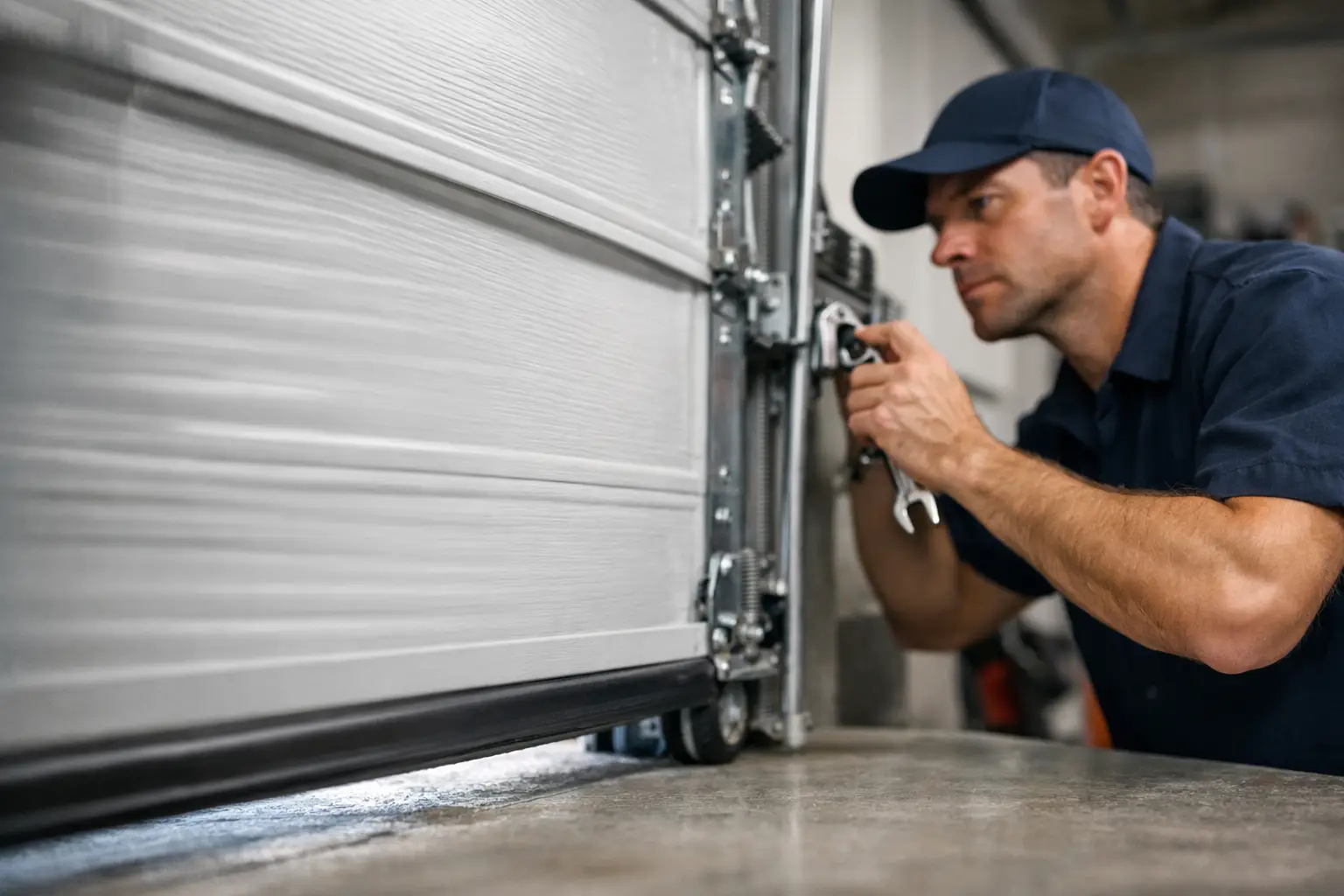
Why Garage Door Vibrates: Causes and Fixes
A garage door should move with a steady hum, not shake the walls, rattle the ceiling, or make you wonder whether something is about to fail. If you are asking why garage door vibrates, the answer is usually not one single part. Vibration often comes from a small alignment, hardware, roller, or opener issue that has gradually become more noticeable.
Some movement is normal, especially with a heavy insulated door or an older home. Strong vibration, sudden shaking, banging, or scraping is different. Those signs deserve attention because a garage door is a heavy moving system, and continued operation can turn a manageable repair into damage to the door, opener, tracks, or even the ceiling support.
Why Your Garage Door Vibrates During Operation
The pattern of the vibration gives useful clues. Does it happen only when the door opens? Does it shake at one spot along the track? Is the whole door moving, or is the opener rail vibrating overhead? A trained technician uses those details to find the real source rather than simply tightening a few visible bolts and hoping for the best.
Loose hardware lets movement travel
Garage doors go through thousands of opening and closing cycles. Over time, the nuts and bolts that secure hinges, track brackets, roller brackets, and opener supports can loosen. Even a small amount of play allows the door sections to shift as they travel, creating a rattle that can echo through the garage.
Loose track mounting brackets are especially common. The tracks must remain secure and properly positioned against the wall and ceiling. If a bracket is loose, the track can flex each time a roller passes through it. The result may be a vibration you can feel in the wall or hear upstairs.
A visual check can help identify obviously loose fasteners, but use caution around the bottom roller brackets, cables, and springs. Those components are under significant tension and should only be adjusted by a qualified garage door professional.
Worn rollers create shaking and noise
Rollers guide the garage door through the tracks. When rollers wear out, crack, seize, or lose their bearings, they no longer move smoothly. Instead, they drag, chatter, or bounce inside the track. This often causes a vibration that is most noticeable when the door is halfway open or closed.
Older steel rollers can be particularly noisy, especially if they have not been maintained. Quality nylon rollers with sealed bearings typically provide quieter, smoother travel. They are not the answer to every vibration issue, but they can make a meaningful difference when worn rollers are the cause.
Do not assume lubricant will fix a failing roller. Lubrication can reduce normal friction, but a cracked wheel or worn bearing needs replacement. Applying excess lubricant can also collect dust and grit, making the problem worse over time.
Bent, dirty, or misaligned tracks affect the door’s path
A garage door relies on tracks that are straight, clean, properly spaced, and securely mounted. A slight bend, dent, or obstruction can make rollers hesitate or jump as they pass through a problem area. You may hear a scraping sound followed by a brief shake.
Track alignment is precise. Trying to bend a track back with a hammer or loosen the mounting hardware without knowing the correct position can create a bigger problem, including an off-track door. If the door is rubbing the track, the rollers are coming out of place, or the track is visibly damaged, stop using the door until it can be inspected.
Houston’s heat and humidity can also contribute to grime buildup and accelerated wear. A clean, properly maintained track gives the rollers a consistent path and helps reduce unnecessary strain on the opener.
The door may be out of balance
A balanced garage door should stay roughly in place when it is lifted manually to about halfway, with the opener disconnected. If it falls quickly, rises on its own, or feels extremely heavy, the spring system may no longer be doing its job correctly.
When a door is out of balance, the opener has to work harder to move it. That extra effort can make the opener rail shake, cause the door to jerk, and shorten the life of the motor, gears, and internal components. A broken spring is often obvious because the door will feel very heavy or the opener may only lift it a few inches. However, spring tension can also be incorrect even when the door still moves.
Garage door springs can cause serious injury if handled improperly. Never attempt to adjust, wind, or remove torsion springs or extension springs yourself. This is a repair where professional service is the safest and most cost-effective decision.
Opener vibration can come from the door or the installation
Sometimes the door is moving well, but the opener unit and rail are shaking overhead. This can happen when the opener mounting brackets are loose, the rail is not properly supported, or the ceiling attachment is flexing. It can also happen when the opener is being forced to compensate for a heavy, unbalanced, or binding door.
A chain-drive opener naturally produces more vibration than many belt-drive models, particularly in garages below bedrooms or living spaces. That does not automatically mean the opener is defective. Still, excessive shaking, a sagging rail, or movement at the ceiling mount should be inspected. The opener must be securely supported with suitable hardware, not improvised straps or undersized material.
An opener upgrade may be worth considering if the existing unit is old, undersized, or loud by design. But replacing the opener without correcting a binding or unbalanced door only transfers the strain to new equipment.
Damaged hinges or door sections can make vibration worse
Each hinge helps the door sections bend correctly as they move through the curved portion of the track. A cracked hinge, loose hinge, or incorrect replacement hinge can change the way the sections move. This may produce popping, shaking, or an uneven gap between sections.
Damage to a door panel can also affect operation. A bent section may not sit squarely in the track, especially after a vehicle impact or storm-related damage. In some cases, panel replacement is a practical repair. In others, the door may have broader structural damage that makes replacement the safer long-term option.
Safe Checks You Can Make Before Calling for Service
You do not need to take apart the garage door to gather helpful information. With the door closed, look for visible dents in the tracks, frayed cables, loose-looking hinges, cracked rollers, or hardware that has backed out. Listen carefully during one normal operating cycle and notice where the vibration begins.
You can also inspect the weather seal and the area around the tracks for debris. Leaves, hardened mud, pest nests, and small objects can interfere with movement. Keep the tracks clear, but avoid spraying them heavily with grease. Garage door tracks are designed to guide rollers, not serve as lubricant reservoirs.
If the door has a manual release cord, only test balance when you are confident the springs and cables appear intact and the door is fully closed before disconnecting the opener. Never test a door that has a broken spring, loose cable, off-track roller, or visible damage. If anything looks unusual, leave the door closed and arrange service.
When Vibration Means You Should Stop Using the Door
A vibrating door becomes a safety concern when the movement is severe, sudden, or paired with signs of mechanical failure. Stop operating the door and call for professional help if you notice any of the following:
- The door shakes violently, binds, or appears to move unevenly.
- A cable is loose, frayed, or has come off its drum.
- A roller has come out of the track or the track is bent away from the wall.
- You hear a loud bang and the door suddenly feels heavy.
- The opener runs but the door will not move normally.
- The door reverses unexpectedly or will not close securely.
These problems can leave your home exposed, trap a vehicle inside, or place unnecessary load on the opener. Continuing to run the door may cause a panel to buckle, a cable to fail, or the door to come off track.
A Proper Repair Starts With the Whole System
The best repair is not always the fastest-looking fix. A technician should inspect the rollers, hinges, tracks, spring balance, cables, opener rail, safety sensors, and mounting points together. Garage door parts work as a system, so a vibration at the opener may begin with worn rollers, while a noisy track may really be the result of an unbalanced door.
At Ranger Garage Door Repair, we explain what is causing the problem, what needs attention now, and what can reasonably wait. For Houston-area homeowners and property managers, that means clear recommendations, quality parts, and repairs completed with the care needed to keep the door operating safely.
A smooth garage door is more than a quiet convenience. It is a sign that the system is moving as it should. Addressing vibration early can protect your opener, reduce wear on the door, and help you leave home each morning confident that the largest moving door in your house is doing its job properly.


