
Can Garage Doors Be Repaired? What to Fix First
A garage door that groans, hangs crooked, or refuses to open can make the whole house feel less secure. So, can garage doors be repaired? In many cases, yes. Springs, rollers, cables, openers, tracks, and even individual panels can often be repaired or replaced without installing an entirely new door. The right answer depends on what failed, the condition of the rest of the system, and whether the door can be restored to safe, dependable operation.
For Houston-area homeowners, timing matters. A nonworking garage door can trap a vehicle, leave a home exposed, or create a serious safety hazard. The goal should not be to replace parts just because they are old. It should be to identify the actual problem and make a clear recommendation that protects your home and your budget.
Can Garage Doors Be Repaired Instead of Replaced?
Most garage door problems involve components that are designed to wear out over time. A garage door is a moving system of heavy panels, springs, cables, hinges, rollers, tracks, and an opener. One worn part can make the entire door noisy, uneven, or difficult to operate.
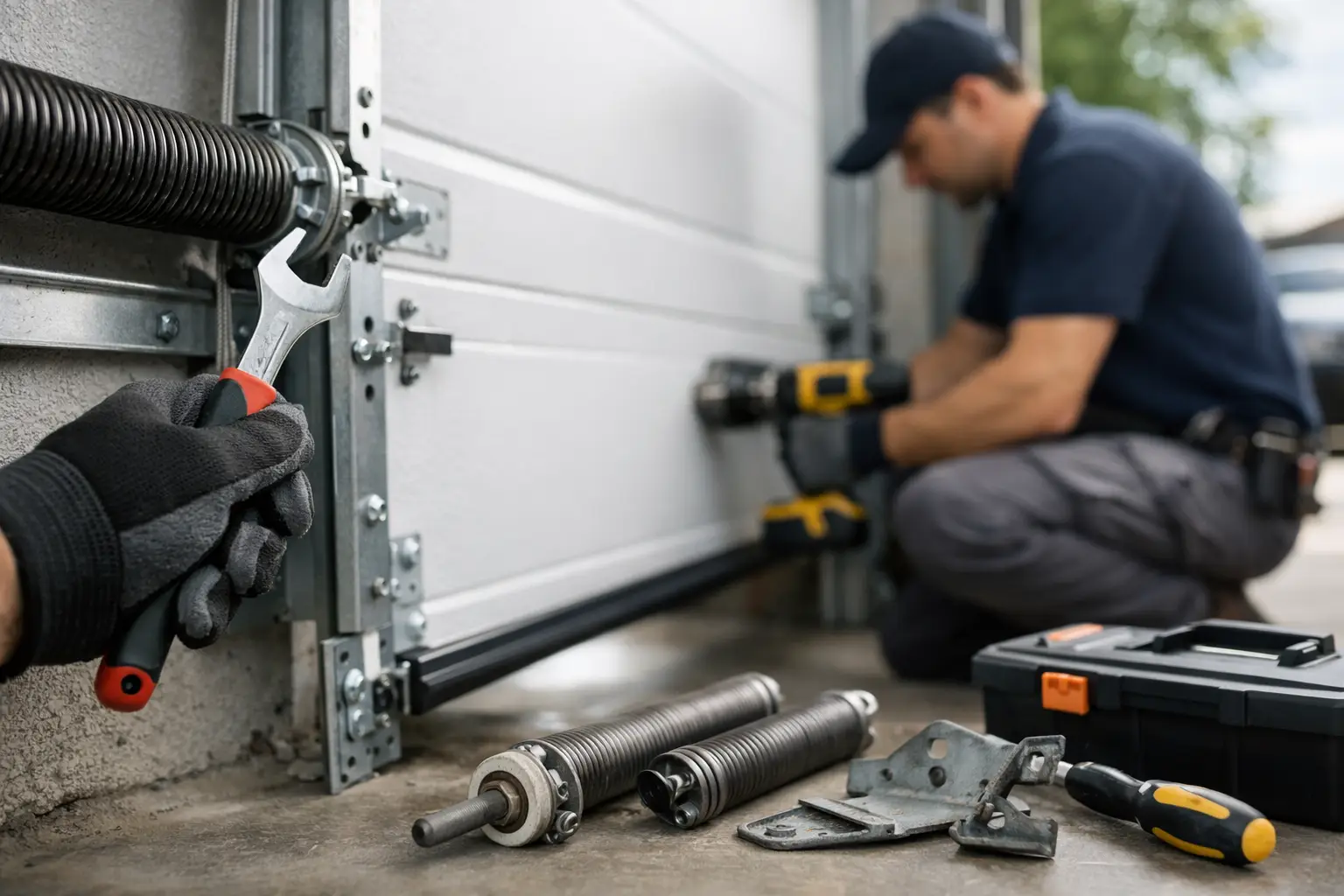
Repairs are usually the sensible choice when the door panels are structurally sound, the door still fits the opening properly, and the needed parts are available. Replacing a broken torsion spring, damaged roller, frayed cable, bent hinge, or failing opener can return a good door to smooth operation. A professional should also inspect related parts, since one failure can place extra strain on the rest of the system.
Replacement becomes more practical when there is extensive damage, severe corrosion, repeated failures, or a door that no longer provides the security, insulation, or appearance you need. There is a difference between a repair that solves the problem and a temporary patch that leaves you facing another service call soon. Honest advice means being clear about that difference.
Common Garage Door Problems That Can Be Repaired
Broken springs
A broken spring is one of the most common reasons a garage door will not open. Springs carry most of the door’s weight. When one breaks, the opener may hum, the door may lift only a few inches, or it may feel extremely heavy if operated by hand.
This is a repair, not automatically a reason to replace the door. However, spring work should always be left to a trained technician. Torsion and extension springs are under significant tension and can cause severe injury or property damage when handled incorrectly. The right repair includes selecting properly sized springs and balancing the door afterward, not simply installing a spring and hoping for the best.
Worn rollers, hinges, and bearings
Rattling, squeaking, jerking, or a rough-moving door often points to worn rollers, loose hinges, or tired bearings. These smaller parts can have a major effect on how quietly and reliably the door operates. Replacing them is usually straightforward and can reduce strain on the opener and tracks.
Houston’s heat and humidity can accelerate wear, especially where maintenance has been neglected. A quality tune-up addresses the worn parts while lubricating the appropriate moving components and checking fasteners, alignment, and door balance.
Damaged cables or an off-track door
If a cable has slipped, frayed, or snapped, do not keep pressing the opener button. Cables help control the movement of the door, and a damaged cable can cause it to bind, tilt, or come off its tracks. A door that is hanging unevenly can be unstable and should be treated as a safety concern.
Off-track garage doors are often repairable when addressed promptly. The technician will secure the door, inspect the tracks and rollers, correct the cause of the problem, and reset the system carefully. If the door was hit by a vehicle or a track is badly crushed, additional parts may be necessary.
Opener and remote problems
Sometimes the door itself is fine, but the opener is not. A faulty wall button, worn gear, damaged safety sensor, failed logic board, weak remote battery, or broken drive component can stop normal operation. Opener repair may be a good option if the unit is otherwise in sound condition.
That said, an older opener may not be worth repeatedly repairing if key components are obsolete or it lacks modern safety and access features. A newer unit can offer quieter operation, battery backup, better lighting, and smartphone controls. The best choice depends on the age of the opener, the repair needed, and how the garage is used.
Dented or cracked panels
A single damaged panel can often be replaced, particularly on a newer door with readily available matching sections. This is a practical way to restore curb appeal after a minor vehicle impact or storm damage without replacing the entire door.
Panel replacement is not always the right move. On older doors, an exact match may be unavailable, and weathering can make a new panel look noticeably different from the existing ones. If several panels are damaged or the impact has affected the frame, tracks, or reinforcement struts, replacing the door may provide a cleaner and more durable result.
When Garage Door Replacement Makes More Sense
Repair is not always the most economical long-term choice. A replacement deserves consideration when the door has widespread rust, rotted wood, major structural damage, multiple bent sections, or repeated breakdowns. The same is true when an older door no longer meets your needs for insulation, wind resistance, security, or appearance.
For example, a homeowner may be able to repair an aging wooden door with damaged bottom sections and failing hardware. But if moisture damage has spread through several panels and the door is already difficult to balance, the cost of continued repairs can add up quickly. A new door may offer better value, improved efficiency, and more reliable operation.
Commercial property owners and managers should also consider downtime. A roll-up or sectional door that repeatedly fails can interrupt deliveries, tenant access, and daily operations. In those situations, the most cost-effective decision is often the one that reduces future disruption, not simply the one with the lowest immediate price.
What You Should Do Before Scheduling a Repair
Start with a quick visual check from a safe distance. Look for a visible gap in the spring, loose or frayed cables, rollers outside the tracks, damaged panels, or anything blocking the photo-eye sensors near the floor. If the opener lights flash and the door reverses, clean the sensor lenses and make sure nothing is in the door’s path.
Avoid pulling, forcing, or repeatedly operating a door that is crooked, unusually heavy, or off track. Do not try to loosen springs, cables, or bottom brackets. These parts are under tension, and a small mistake can turn a repairable issue into a dangerous one.
It also helps to note when the problem began and what the door did just before it failed. Was there a loud bang? Did it start moving slowly? Did the opener run but the door stay still? Those details help a technician diagnose the issue efficiently and explain the repair clearly.
What a Proper Garage Door Repair Should Include
A quality repair is more than replacing the first broken part that is visible. The door should be inspected for balance, track condition, roller wear, cable condition, hinge integrity, safety sensor function, and opener performance. When a torsion spring is replaced, the door should be balanced so it can be lifted smoothly and does not place unnecessary force on the opener.
You should receive a straightforward explanation of the problem, the recommended repair, and any reasonable options. There is no value in pressure or vague language when you are making a decision about your home’s safety. At Ranger Garage Door Repair, that means treating each service call with the same care we would want for our own family: clear communication, premium parts, and work done right the first time.
Protect the Repair With Simple Maintenance
A garage door does not need complicated upkeep, but it does benefit from regular attention. Test the opener’s reversing function periodically, keep the photo-eye sensors clear, and listen for new scraping, popping, or grinding sounds. Lubricate moving metal parts with a garage-door-safe product as recommended, but do not coat the tracks with grease. Tracks need to remain clean so rollers can move freely.
An annual professional inspection is a practical way to catch worn springs, loose hardware, and roller issues before they create an emergency. It is especially worthwhile for doors used multiple times a day, doors exposed to humidity and storms, or doors that protect vehicles, tools, and direct entry into the home.
If your garage door is making unusual noises, moving unevenly, or leaving you without reliable access, do not wait for a small issue to become a major one. A timely inspection can give you a clear answer, restore safe operation, and let you get back to using your garage with confidence.


