
Belt Drive Versus Chain Drive for Garage Doors
A garage door opener can be easy to overlook until its noise wakes a sleeping child, its chain starts rattling, or the door stops halfway when you are trying to leave for work. When homeowners compare belt drive versus chain drive openers, the right answer is rarely about which one is universally better. It comes down to your door’s weight, the garage’s location, how often the door runs, and what matters most to your household.
For many homes in the Greater Houston area, a belt-drive opener is the better fit because it operates quietly and smoothly. A chain-drive opener remains a dependable choice for heavier doors, detached garages, and some high-use applications. Here is how to make the decision with clear expectations and no guesswork.
What Separates Belt and Chain Drive Openers?
Both systems move the garage door along its track by connecting the opener motor to the trolley. The trolley is the component that pulls the door open and pushes it closed. The difference is in the drive mechanism.
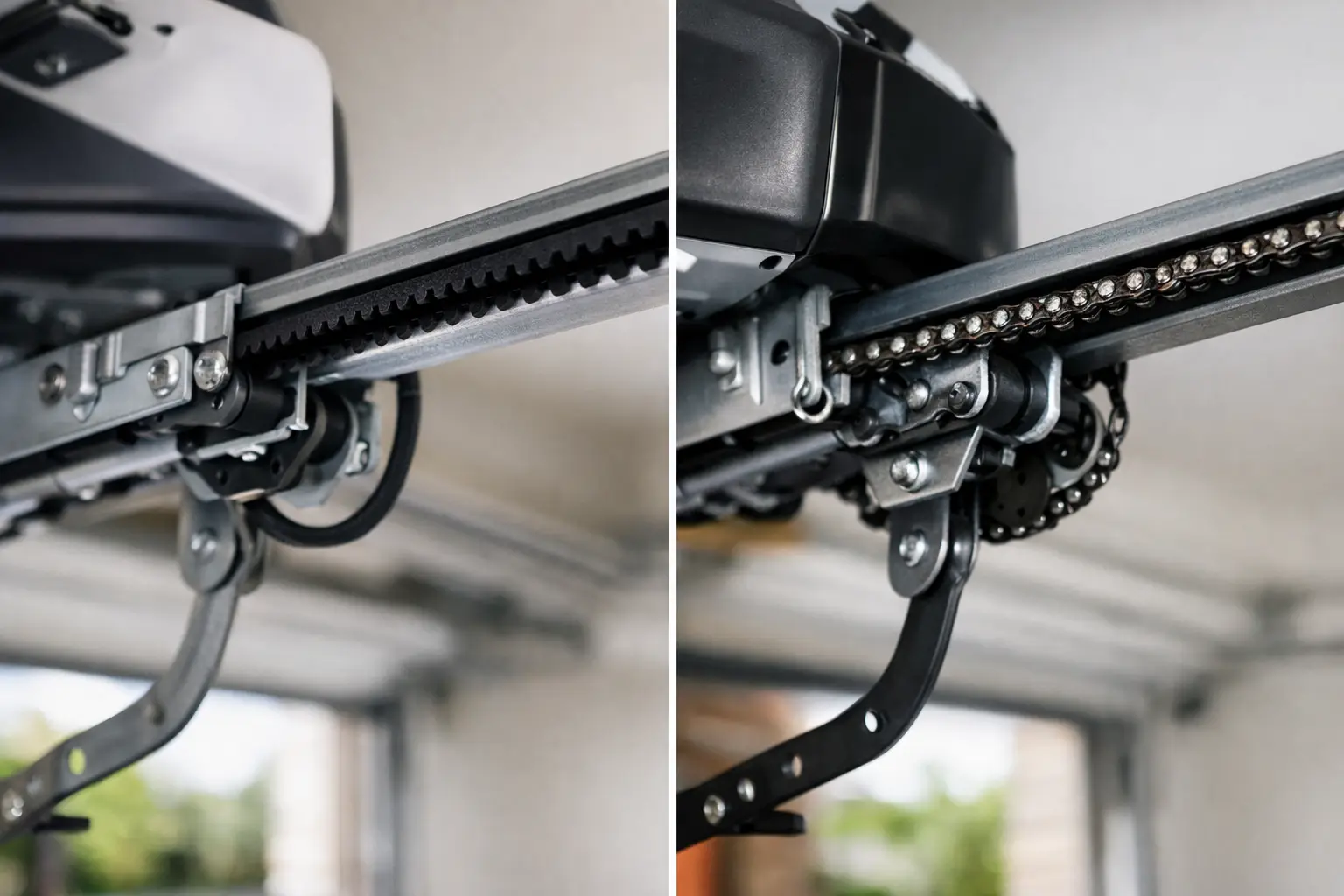
A chain-drive opener uses a metal chain similar in appearance to a bicycle chain. It is strong, time-tested, and usually less expensive upfront. You will hear the chain as it moves, especially as the opener ages or needs adjustment.
A belt-drive opener uses a reinforced rubber belt, often strengthened with steel cords. The belt does the same job without metal-on-metal movement. That design greatly reduces vibration and operating noise. Modern belt-drive openers are not light-duty equipment. A properly selected model can reliably operate most standard residential garage doors, including insulated steel doors and many wood doors.
The motor, rail, door balance, installation quality, and maintenance all affect performance. The drive type matters, but it is only one piece of a dependable garage door system.
Belt Drive Versus Chain Drive: The Noise Difference
Noise is usually the deciding factor for homeowners. Chain-drive openers make a distinct mechanical sound as the chain travels across the rail. It is not necessarily a sign of a problem. It is simply how the system works. Still, the sound can become disruptive when a bedroom, nursery, office, or living space sits above or next to the garage.
A belt-drive opener is substantially quieter. You will still hear the door rollers moving on the tracks and the door sections flexing as they travel, but the opener itself produces less vibration and clatter. For an attached garage, that difference is noticeable every day.
Keep in mind that a quiet opener cannot make a neglected door silent. Worn rollers, loose hinges, dry bearings, and an unbalanced door can create plenty of noise on their own. If your garage door suddenly becomes loud, an inspection may solve the problem without replacing the opener.
Strength: Can a Belt Drive Handle a Heavy Door?
This is where old assumptions can lead homeowners in the wrong direction. Chain drives have a long-standing reputation for strength, and they are still an excellent option for particularly heavy doors or demanding commercial applications. But a belt drive is not automatically too weak for a heavy residential door.
The important question is whether the opener is properly rated for the door and whether the door is balanced correctly. A garage door should feel relatively manageable when disconnected from the opener and lifted by hand. The springs carry the door’s weight. The opener guides the door through its travel; it should not be doing the work of lifting an excessively heavy or poorly balanced door.
A heavy custom wood door, oversized door, or high-cycle commercial door may call for a more specialized opener and a professional evaluation. For a typical two-car residential door, a quality belt-drive model is often more than capable. Choosing based on the door’s actual weight and usage is smarter than relying on the drive type alone.
Upfront Cost and Long-Term Value
Chain-drive openers generally cost less than comparable belt-drive units. For a detached garage or a budget-conscious replacement, that lower initial price can make perfect sense.
Belt-drive openers usually cost more, but the extra investment often pays for improved comfort in an attached garage. Many current belt-drive models also include useful features such as battery backup, smartphone control, motion-detection lighting, and integrated cameras. Those features are available on some chain-drive models as well, so compare the full opener package rather than assuming the drive system determines every feature.
The best value is not always the least expensive unit. An opener that matches your door, is installed correctly, and receives basic care is less likely to create inconvenient breakdowns or premature wear.
Maintenance and Reliability Expectations
A chain drive needs periodic attention. The chain must maintain proper tension, and the rail and moving components may need lubrication according to the manufacturer’s instructions. A loose chain can become noisier and may affect operation. An overtightened chain can also place unnecessary stress on the opener.
A belt drive does not need chain lubrication and generally requires less drive-specific maintenance. That does not mean it is maintenance-free. The belt should be inspected for wear or damage, and the door hardware still needs routine service. Springs, cables, rollers, hinges, tracks, sensors, and the opener’s safety reversal system all deserve attention.
Reliability also depends heavily on installation. A rail that is not properly supported, incorrect travel limits, or an opener installed on a door with worn springs can shorten the life of either system. Quality parts and precise setup matter more than shortcuts.
Safety and Security Features Matter More Than the Drive
Whether you choose a belt or chain drive, look for modern safety features. Photo-eye sensors should stop and reverse the door if an object crosses the opening. The opener should also reverse when it contacts an obstruction during closing. Test these functions regularly, particularly if children or pets use the garage area.
Battery backup is worth serious consideration in Houston. A power outage can leave you without convenient access to the garage, and some neighborhoods rely on the garage as a primary entry point. Battery backup allows the opener to operate for a limited number of cycles during an outage.
Security features such as rolling-code technology and smart controls can add peace of mind. However, no smart feature replaces a properly closing, properly secured garage door. If the door will not close all the way, reverses unexpectedly, or has a damaged bottom seal or panel, address the mechanical issue promptly.
What Works Best in Houston Homes?
For an attached garage under a bedroom or beside a family room, a belt-drive opener is usually the clear recommendation. The quieter operation improves daily comfort, especially for households with early schedules, young children, or people who work from home.
For a detached garage, a chain drive can be a practical and durable choice because opener noise is less likely to affect the home. It can also be a sensible option for a rental property where dependable operation and straightforward service are the priorities.
Houston heat and humidity make routine inspection valuable for either choice. Heat, moisture, dust, and frequent use can expose weak points in rollers, hinges, weatherstripping, and electronics over time. A well-maintained door reduces the strain placed on the opener, belt, or chain.
How to Choose the Right Opener for Your Door
Start with the garage itself. If the garage shares walls or a ceiling with living space, prioritize quiet operation and consider a belt drive. If it is detached and budget is the primary concern, a chain drive may serve you well.
Next, consider the door. Standard steel residential doors are usually compatible with either option when the opener is appropriately rated. For insulated, oversized, carriage-style, solid wood, or custom doors, have the door weight, spring balance, and usage needs evaluated before selecting an opener.
Finally, think about the features you will actually use. Battery backup, smart access, a camera, brighter lighting, and reliable remote controls can be more valuable than a small difference in upfront price. Choose the unit that supports your household’s routine without paying for features you do not need.
When an Opener Problem Needs Professional Service
Do not assume a noisy, slow, or struggling opener needs replacement. The problem may be a worn roller, damaged hinge, loose hardware, failing capacitor, misaligned sensor, or an unbalanced door. A broken spring can make an opener appear weak because it is trying to move a door without the support it was designed to have.
Never adjust garage door springs or cables without proper training and tools. Those components carry significant stored energy and can cause serious injury. A qualified technician can inspect the whole system, explain what is causing the problem, and recommend whether repair or replacement is the better long-term choice.
The right opener should make coming home feel simple: press the button, let the door move smoothly, and trust that it will close securely behind you. Whether that means a quiet belt drive or a durable chain drive, a properly balanced door and careful installation are what keep the system dependable for the long haul.


