
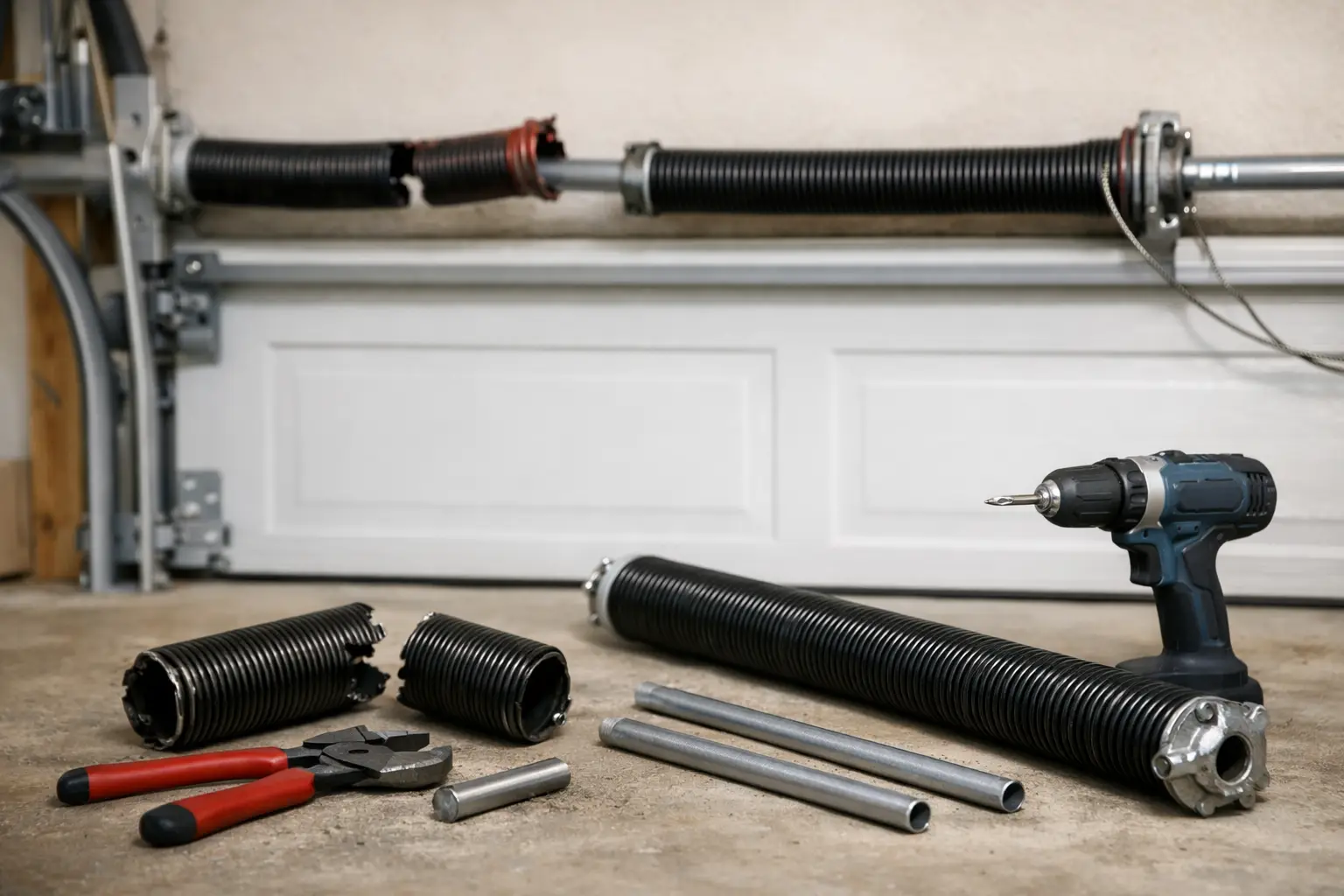
Broken Garage Door Spring Replacement Steps
A garage door that suddenly will not open is more than an inconvenience. It can trap your vehicle, disrupt your workday, and leave one of your home’s main entry points unsecured. In many cases, the cause is a failed spring. Broken garage door spring replacement is a repair that deserves prompt, professional attention because the springs carry nearly all the door’s weight.
A properly functioning garage door should feel controlled and balanced, whether it is opened by hand or with an opener. When a spring breaks, that balance disappears. The door may become too heavy to lift, the opener may strain or stop, and forcing the system can create a larger repair than the original problem.
How to Tell if a Garage Door Spring Is Broken
The clearest sign is often a loud bang from the garage. Homeowners sometimes describe it as a gunshot or a heavy object hitting the floor. That sound is usually the spring releasing stored tension as it breaks.
You may also notice that the door opens only a few inches before stopping, or that the opener hums without lifting the door. If you disengage the opener and the door feels extremely heavy, a broken spring is likely. A two-car garage door can weigh several hundred pounds, so this is not a situation to test by trying to muscle the door open.
Look above the door for a gap in the coil of a torsion spring. Torsion springs are mounted on a steel shaft above the header. Extension springs, which are more common on some older systems, run along the horizontal tracks on each side of the door. Either type can fail, and both require careful handling.
Other symptoms can resemble a spring problem. A door that is off track, a damaged cable, a worn roller, or an opener issue can also prevent normal operation. That is why a professional inspection matters. The right repair starts with identifying the actual source of the problem rather than replacing parts based on a guess.
Why Broken Garage Door Spring Replacement Is Not a DIY Job
Garage door springs are under significant tension, even when the door is closed. That tension is what allows a heavy door to lift smoothly. Releasing, winding, or removing a spring without the right training and tools can cause serious injury or property damage.
Online tutorials can make the work appear straightforward, but they rarely account for the differences between door weight, track condition, shaft size, cable routing, spring dimensions, and previous repairs. A spring that is incorrectly sized or installed can make the door unbalanced, wear out the opener, and create a recurring safety issue.
The safest immediate steps are simple: keep people and vehicles away from the door, do not repeatedly run the opener, and avoid pulling on cables or touching the springs. If the door is open when the spring fails, do not stand beneath it or attempt to close it by hand. A technician can secure the door, inspect the full counterbalance system, and restore safe operation.
What a Professional Spring Repair Should Include
A quality spring repair is not just about removing a broken part and installing a new one. The technician should first confirm the door’s weight and configuration. Springs must be selected for the specific door, not chosen as a one-size-fits-all replacement.
During the visit, the technician should inspect the cables, drums, bearings, rollers, hinges, tracks, and center bracket. These parts work together every time the door moves. A frayed cable or worn bearing may not be the reason the spring broke, but ignoring it can shorten the life of the new spring or cause another failure soon after.
Once the correct spring is installed, the door should be balanced and tested manually. A balanced door stays near the halfway point when disconnected from the opener instead of racing upward or falling downward. The opener should then be tested, including its safety reversal system and photo-eye sensors.
This process is where craftsmanship makes a difference. The goal is not simply to get the door moving before the technician leaves. The goal is smooth, safe, dependable operation that protects your door, opener, and household.
Should Both Garage Door Springs Be Replaced?
Many double garage doors use two torsion springs. When one breaks, homeowners often ask whether they need to replace both. There is no universal answer, but replacing both is often the practical choice when they were installed at the same time.
Springs on the same door generally have the same cycle rating and experience the same daily use. If one has reached the end of its service life, the other may not be far behind. Replacing the pair can reduce the chance of another unexpected breakdown in the near future and helps keep the door balanced evenly.
There are exceptions. If one spring was replaced recently and the other was not, or if the door uses different spring specifications, a technician should assess the system before making a recommendation. Honest service means explaining the condition of each component and letting the homeowner understand the options without pressure.
Spring Life Depends on More Than Age
Garage door springs are rated in cycles, with one cycle meaning the door opens and closes once. Standard springs may be designed for around 10,000 cycles, while higher-cycle springs can last substantially longer. The right choice depends on how often the door is used and how long you expect to remain in the home.
For a family that uses the garage as the main entrance, the door may operate several times each day. In that case, higher-cycle springs can be a sensible investment because they reduce the likelihood of premature failure. For a lightly used detached garage, standard springs may be entirely appropriate.
Houston-area conditions also matter. Heat, humidity, and normal wear can affect moving metal parts over time. Springs eventually wear out, but annual maintenance can help identify dry bearings, loose hardware, worn rollers, and balance concerns before they place extra strain on the system.
Protecting Your Opener After a Spring Breaks
Your garage door opener is designed to guide a balanced door, not lift its full weight by itself. When a spring breaks, continuing to press the remote can strip gears, overheat the motor, or damage the opener’s drive system. That can turn one repair into two.
If the opener starts but the door will not move, stop operating it. Do not increase the force settings in an attempt to make it work. Force adjustments are not a fix for a heavy, unbalanced door and can make the door less safe.
After the spring repair, the opener may need a quick inspection or adjustment. The technician should verify that the opener runs smoothly, the travel limits are correct, and the safety sensors respond properly. Those final checks help ensure the entire system is working as intended.
What to Expect From a Same-Day Repair Visit
When your garage door is stuck, clear communication matters. A professional service visit should begin with an evaluation of the door and an explanation of what failed. You should understand the recommended repair, the parts being used, and the cost before work begins.
For most residential doors, a properly equipped technician can complete spring replacement during the same visit. The exact timing depends on the door type, spring configuration, condition of related components, and whether the door has additional damage. If a cable has come off or the door is off track, those issues should be addressed before normal operation resumes.
At Ranger Garage Door Repair, the standard is straightforward: explain the problem clearly, use premium-quality parts, and complete the repair with the precision needed to get the door running safely. Homeowners deserve a repair that is done right the first time, not a rushed temporary fix.
A broken spring rarely gives much warning, but the response can be simple. Leave the door alone, protect the opener from added strain, and have the system inspected by a qualified technician. A careful repair restores more than access to your garage – it restores the daily safety and reliability your home depends on.


