
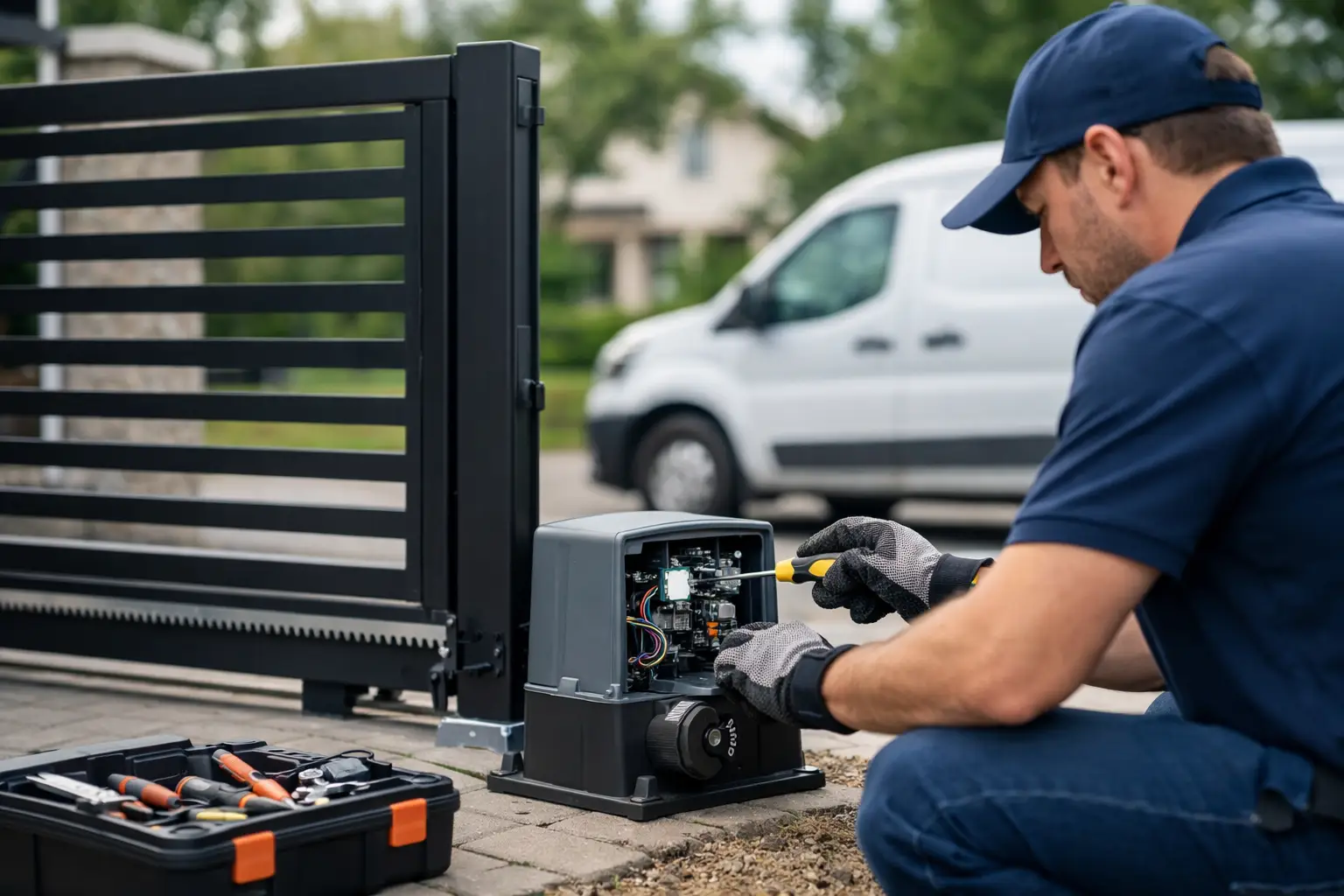
Electric Gate Repair Houston When to Call
A gate that will not open at 7 a.m. can throw off an entire day. It may leave your car trapped in the driveway, delay deliveries, create a security concern, or keep customers from reaching a commercial property. When you need electric gate repair Houston property owners can rely on, the priority is not just getting the gate moving again. It is restoring safe, dependable access without creating a larger problem.
Electric gates work hard in Houston. Heat, humidity, heavy rain, shifting soil, insects, power fluctuations, and daily use all take a toll on motors, control boards, safety sensors, hinges, rollers, and gate hardware. A gate may give small warnings for weeks before it finally stops. Knowing what those warnings mean can help you make a smart repair decision before access becomes an emergency.
Common Signs Your Electric Gate Needs Attention
A healthy gate should move smoothly, stop where it is supposed to stop, and respond consistently to its remote, keypad, or access-control system. If operation starts to feel unpredictable, do not assume the opener is the only issue. The gate itself and the safety system need to be checked as a complete unit.
Slow movement is one of the most common early signs. A sliding gate that drags, jerks, or strains may have a worn wheel, debris in the track, a misaligned gate, or a motor working against too much resistance. A swinging gate that hesitates or sags can have hinge wear, arm damage, or an alignment issue. Continuing to run a gate under strain can shorten the life of the operator and lead to a more expensive repair.
Other problems deserve prompt attention: the gate opens but will not close, stops partway through a cycle, reverses for no clear reason, makes grinding or clicking noises, or works only intermittently. If a remote or keypad suddenly stops working, the cause may be as simple as a battery or as involved as a damaged receiver, wiring fault, or failing control board.
A gate that closes on a vehicle, person, pet, or object is not a minor inconvenience. It is a safety concern that should be taken out of service until a qualified technician can inspect the sensors, entrapment protection, limits, and operating force.
Why Houston Weather Is Hard on Electric Gates
Houston-area weather creates conditions that are especially tough on outdoor access systems. Moisture can enter electrical enclosures, corrode terminals, affect low-voltage wiring, and interfere with photocells. After a major storm, a gate may fail because of water intrusion, a tripped breaker, damaged wiring, or a surge that affected the operator.
Heat is another factor. An operator that runs hot, cycles repeatedly, or sits in direct sunlight may begin shutting down intermittently to protect itself. That does not always mean the motor has failed. The gate could be binding, the capacitor may be weakening, or the operator may be undersized for the gate’s weight and daily traffic.
Houston’s clay soil also matters. Over time, posts can shift and concrete pads can settle. A slight change in alignment can cause a sliding gate to rub its track or a swing gate to stop short of its latch point. The best repair addresses the source of the strain, not just the symptom. Replacing a control board will not solve a gate that is physically out of alignment.
When to Stop Troubleshooting and Call a Professional
Property owners can safely check a few basic items before requesting service. Make sure the operator has power, confirm that the breaker has not tripped, replace remote batteries if needed, and look for obvious debris around a track or safety sensor. If your system has a manual release, use it only according to the manufacturer’s instructions and only when you can do so safely.
Beyond those basic checks, electric gate repairs are best left to a trained professional. Operators contain moving components, electrical connections, and safety settings that must be adjusted correctly. A gate can weigh hundreds or even thousands of pounds. Trying to force it open, bypass sensors, or adjust motor force without the right equipment can damage the system or create a serious injury risk.
Call for professional service right away if the gate is stuck closed, stuck open, off its track, leaning, making loud mechanical noise, repeatedly tripping a breaker, or failing to reverse when it encounters an obstruction. Commercial properties should also act quickly when a gate malfunction affects fire access, tenant entry, delivery traffic, or site security.
Do Not Bypass Safety Devices
It can be tempting to disconnect a photocell or hold a button down just long enough to get through the gate. That may seem practical in the moment, but it removes safeguards designed to prevent injuries and property damage. A properly repaired gate should provide convenience and security without asking anyone to take a risk.
What a Thorough Electric Gate Repair Should Include
A quality service visit starts with diagnosis, not guesswork. The technician should inspect the gate’s physical movement before assuming the operator is at fault. That means checking tracks, rollers, hinges, wheels, welds, posts, chains, guide rollers, and the condition of the gate frame.
Next comes the electrical and control side of the system. Depending on the issue, this may include testing power supply, batteries, wiring, terminals, limit switches, control boards, receivers, keypads, loop detectors, photo eyes, and gate operator components. The goal is to identify why the failure happened and explain the repair in plain language.
For example, a gate that will not close could have a blocked photo eye, but it could also have a damaged wire that loses connection when the gate moves. A gate that opens slowly may need an operator repair, or it may simply need its track cleaned, wheels replaced, and alignment corrected. These are very different repairs with different costs and long-term results.
An honest recommendation should distinguish between a repair that makes sense and an operator that is near the end of its service life. If a dependable repair is available, that is usually the right place to start. If the system has repeated failures, obsolete parts, poor safety protection, or an operator that cannot handle the gate’s weight and usage, replacement may be the better value over time.
Residential and Commercial Gates Have Different Demands
A residential driveway gate may operate a few times a day and mainly needs quiet, dependable access for family members and guests. A commercial gate at an apartment community, warehouse, medical office, or storage facility may cycle dozens or hundreds of times daily. It may also depend on telephone entry, key fobs, card readers, vehicle loops, timed access schedules, or backup power.
That difference affects the repair approach. A component that works fine for a light residential gate may not hold up under commercial traffic. For a business or property manager, downtime also carries a higher cost. Tenants may be unable to enter, deliveries may be delayed, and a gate stuck open can compromise security after hours.
For either type of property, the right repair is the one that matches the gate’s actual use. A qualified technician should consider gate weight, length, condition, daily cycles, access-control needs, and safety requirements before recommending parts or upgrades.
Preventing the Next Gate Failure
Most gate failures are not completely random. Regular maintenance can catch developing issues while the gate is still operating. In Houston, a professional inspection once or twice a year is a practical investment, especially for gates exposed to weather or used heavily.
Maintenance typically includes cleaning tracks and sensor lenses, checking alignment, tightening hardware, inspecting rollers and hinges, testing safety reversal features, reviewing electrical connections, lubricating approved moving parts, and confirming that limits and force settings are correct. Batteries in solar or backup-power systems also need attention, since a weak battery can look like an operator problem.
Between service visits, keep the gate path clear. Do not let landscaping grow into sensors or moving hardware. Watch for standing water near the operator, loose hardware, unusual noise, or changes in how the gate travels. Those details are useful when you call for service, and early action can often prevent a full shutdown.
Choose Repair Based on Safety, Not Just Speed
Fast service matters when access is blocked, but speed should not come at the expense of workmanship. The best electric gate repair technicians take time to identify the failure, explain the options, use quality parts, and test the system before they leave. You should know what was repaired, why it failed, and what to watch for next.
Whether your gate protects a family home in Katy, a business in Houston, or a managed property in Sugar Land, dependable operation starts with a system that is balanced, secure, and properly maintained. If your gate is showing warning signs, address them before a small issue becomes a day-long disruption. A careful repair now can protect your access, your property, and your peace of mind.


