
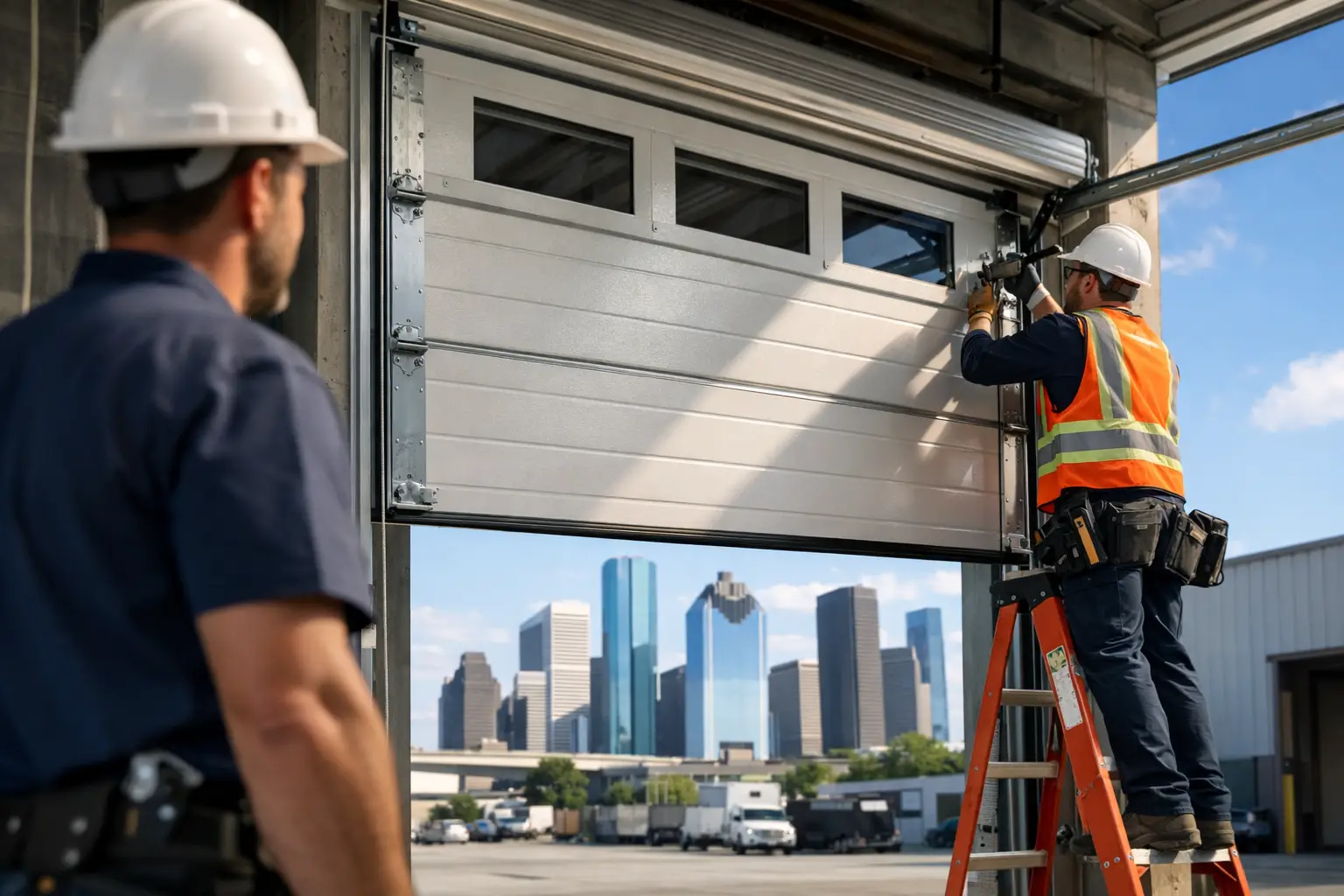
Commercial Garage Door Installation in Houston
A commercial door that sticks at opening time can hold up deliveries, frustrate employees, and leave a building exposed after hours. Commercial garage door installation is not simply a matter of fitting a new door into an opening. It is a carefully planned upgrade to your building’s security, traffic flow, safety, and day-to-day reliability.
For Houston-area businesses, property managers, warehouses, auto shops, and multifamily properties, the right door needs to handle more than routine use. It must stand up to heat, humidity, storms, vehicle traffic, and the real demands of your operation. A properly specified and professionally installed door helps prevent costly interruptions before they start.
Start With How the Door Will Be Used
The best commercial door is the one that fits the work happening behind it. That sounds straightforward, but it is where many installation decisions go wrong. A door used twice a day at a storage building has different needs than one opening every few minutes at a distribution facility.
Before selecting a door, consider what moves through the opening, how often the door cycles, whether people work near it, and how much security the property requires. The opening itself matters too. Ceiling height, side room, headroom, electrical access, wall condition, and available space for tracks all affect the right installation approach.
A service bay may benefit from an insulated sectional steel door with windows for visibility. A warehouse loading area may call for a rolling steel door designed for durability and security. A busy facility with frequent forklift traffic may need a high-cycle system and faster operation to reduce bottlenecks. There is no one-size-fits-all answer, and honest recommendations should begin with the building and its daily demands.
Door Type Is Only Part of the Decision
The door panel is the most visible piece of the system, but it is not the whole system. Commercial doors rely on correctly sized springs, heavy-duty tracks, cables, drums, rollers, hinges, and an operator suited to the door’s weight and usage.
Choosing a lower-cost door with undersized hardware may save money at the beginning, but it can create premature wear and recurring service needs. On the other hand, installing a high-cycle, insulated door where it is not needed can add cost without providing a meaningful return. The goal is a balanced recommendation based on performance, safety, and long-term value.
What a Professional Commercial Garage Door Installation Includes
A quality installation starts well before the new door arrives. Accurate measurements are essential, including the width and height of the opening, headroom above it, side clearance, floor level, and structural condition of the jambs and header. Even a small measurement error can lead to poor alignment, air gaps, binding, or unnecessary stress on the operator.
The old door and hardware must be removed safely when replacement is involved. Commercial springs and cables store significant force. This is not a DIY task or a job to hand off to an untrained crew. Proper handling protects the people on site and prevents damage to the building, vehicles, or new equipment.
Once the opening is prepared, technicians install and align the vertical and horizontal tracks, assemble the door sections or curtain, and set the spring system to the correct tension. The door must travel smoothly by hand before the operator is connected. If a door is difficult to move manually, an operator will not fix the underlying problem. It will simply work harder and wear out sooner.
After that, the operator, controls, safety devices, and access equipment are installed and tested. This may include wall-mounted controls, keypads, remotes, vehicle sensors, photo eyes, timers, and integration with an access-control system. Final adjustments should confirm that the door opens fully, closes evenly, reverses properly when required, and seals correctly at the floor and sides.
Safety Features Are Not Optional Extras
A commercial door is heavy, often moves around employees and customers, and may operate in areas with vehicle traffic. Safety equipment should be chosen based on the specific risks of the location, not treated as an afterthought.
Photo eyes help detect an obstruction in the door’s path. Monitored safety edges can provide additional protection at the bottom of the door, especially on larger openings. Warning lights and audible alerts are useful where people or forklifts frequently pass through. In some settings, a timer-to-close feature can improve security, but it should be paired with the right safety devices and set for the way the space is actually used.
Fire-rated doors require additional care. They may need to meet specific labeling, closing, and testing requirements. If your building has a rated opening, replacing it with a standard door can create compliance and safety concerns. A qualified installer should verify the application before recommending a replacement.
Insulation, Wind Load, and Houston Weather
Houston businesses deal with high heat, humidity, heavy rain, and severe weather. These conditions can influence the door you choose, particularly for facilities with climate-controlled spaces, valuable inventory, or large exposed openings.
Insulated commercial doors can help reduce heat transfer and improve comfort near work areas. They also tend to offer a more finished appearance and may provide better sound control. Insulation is especially worth considering for auto shops, warehouses with conditioned offices, storage facilities, and buildings where employees work close to the door.
Wind-load requirements deserve equal attention. A commercial door must be appropriate for the building location and applicable local requirements. Reinforcement, track design, and hardware all play a role in how the door performs under pressure. This is one area where cutting corners can turn a severe-weather event into a much larger property-loss problem.
Weather seals also matter. Bottom seals, perimeter seals, and properly aligned sections help limit water intrusion, dust, pests, and conditioned-air loss. They will not make a loading dock waterproof during a driving storm, but they do make a noticeable difference in normal conditions when installed correctly.
Choosing the Right Commercial Door Operator
The operator should match the door, not just fit above it. Commercial operators are selected based on door size, weight, lift type, frequency of use, and available mounting space. Common options include trolley operators, jackshaft operators, hoist operators, and direct-drive systems.
For a light-use door, a standard-duty commercial operator may be appropriate. For a busy service department or warehouse entrance, a medium-duty or high-cycle operator can be the better investment. The key is to avoid using residential-grade equipment on a commercial opening simply because it appears less expensive. It is rarely designed for the workload, and failure can disrupt business at the worst possible time.
Access needs should be addressed at the same time. A business may need keyed entry, keypad codes for staff, remote controls for drivers, smartphone access, or integration with a gate or building-access system. Clear planning prevents the common problem of installing a good door and then discovering that the right people cannot use it conveniently or securely.
Plan for Maintenance Before the First Service Call
Every moving door needs maintenance, especially a commercial door that works hard. Springs cycle, rollers wear, fasteners can loosen, and track alignment can change over time. Small issues are easier and less expensive to correct before they become an emergency closure or a damaged operator.
A practical maintenance plan includes periodic inspection of springs, cables, rollers, hinges, tracks, safety devices, weather seals, and operator functions. The schedule depends on how frequently the door operates. A low-use storage door may need less attention than a loading door running dozens of cycles each day.
Your team can help by reporting unusual noises, slow movement, uneven closing, damaged panels, frayed cables, or changes in how the door responds to controls. They should never attempt to adjust springs, cables, or bottom fixtures. Those components are under tension and require professional service.
The Value of Clear Communication During Installation
Commercial projects affect more than the door opening. They can affect deliveries, employee access, tenant operations, customer parking, and security. A reliable installer communicates the schedule, site requirements, equipment needs, and expected downtime before work begins.
Ask who will handle removal, electrical coordination, safety testing, cleanup, and disposal of old materials. Confirm whether the installation will require access to the interior of the building, temporary closure of a lane or bay, or adjustments to existing access controls. These details keep the project organized and reduce avoidable disruption.
At Ranger Garage Door Repair, we believe commercial property owners deserve straightforward answers, precise workmanship, and a door system built for the job it has to do. That means explaining the available options clearly, recommending what makes sense for your property, and completing the work with care.
A commercial door should support your operation quietly and reliably every day. When it is time to install or replace one, taking the time to match the door, hardware, operator, and safety features to your building will pay off long after installation day.


