
Is Garage Door Insulation Worth It in Houston?
A Houston garage can feel like a heat reservoir by late afternoon. If there is a bedroom, office, workout room, or living space beside or above it, that heat does not always stay in the garage. Garage door insulation can help reduce that transfer, but it is not a cure-all, and it is not the right upgrade for every door.
The best choice depends on the condition of the door, how the garage is used, the type of insulation installed, and whether the rest of the garage has air leaks. A quality installation should make your garage more comfortable without affecting safe, reliable door operation.
What Garage Door Insulation Actually Does
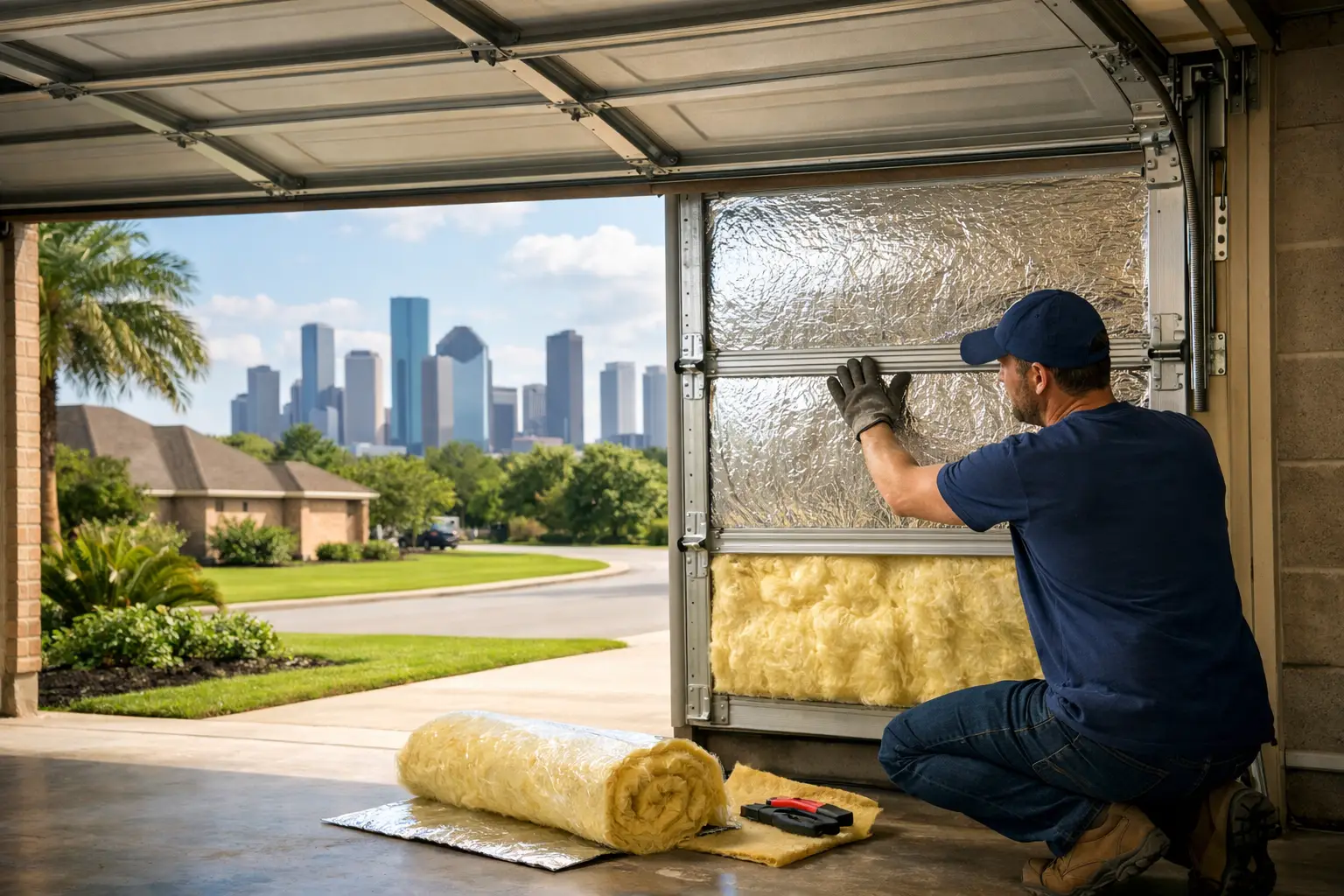
An insulated garage door has material placed between its interior and exterior steel layers, or added to the inside of an existing door. That material slows the movement of heat through the door. In Houston’s long cooling season, it can limit how much outdoor heat radiates into the garage. During the occasional cold snap, it also helps the space hold warmth longer.
Insulation can make a noticeable difference in comfort, particularly when the garage faces west or receives direct afternoon sun. It can also soften street noise, reduce the hollow sound of the door moving, and make the panels feel more solid. For homeowners with an attached garage, those benefits may extend to rooms that share a wall or ceiling with it.
What it does not do is turn an unconditioned garage into an air-conditioned room. If the garage has gaps around the door, an unsealed attic, poor wall insulation, or frequent vehicle traffic, heat and humidity will still enter. Think of door insulation as one useful part of a larger comfort and energy-efficiency plan.
When Garage Door Insulation Makes Sense
Insulation is usually a worthwhile consideration when the existing door is structurally sound, operates smoothly, and has years of useful life left. It is especially practical for attached garages, garages below bedrooms, workshops, home gyms, and spaces where you regularly spend time.
It can also help protect items affected by extreme heat. Paint, tools, stored electronics, seasonal decorations, and certain household supplies are better off when garage temperatures are less severe. The benefit varies by home, but reducing the peak temperature inside the garage can make the space more usable through a Houston summer.
For detached garages used only for parking and basic storage, the return may be less dramatic. The same is true if the rest of the building has major air leaks. Before investing in insulation, look at the bottom seal, side weatherstripping, top seal, and the condition of the door itself. A worn bottom seal can allow dust, water, pests, and hot air inside regardless of what is in the door panels.
A quick test before you invest
Stand inside the closed garage during daylight. If you can see light around the sides, top, or bottom of the door, weather sealing deserves attention. Then look at the panels. Rust, cracked sections, sagging, damaged hinges, and frequent off-track issues may mean a replacement door is the better long-term investment.
A door that is difficult to lift by hand or reverses unexpectedly should be repaired before adding weight. The door, springs, tracks, rollers, and opener work as one system. Comfort upgrades should never come ahead of safe operation.
Insulation Types and R-Value, Explained Simply
Garage door insulation is often described by its R-value. In simple terms, a higher R-value means the material resists heat flow more effectively. It is useful for comparison, but it should not be the only factor in your decision.
Polystyrene insulation is commonly used in insulated garage doors. It comes in rigid panels and offers dependable thermal performance at a moderate price. Polyurethane insulation is injected between steel layers and expands to fill the panel. It typically provides a higher R-value for its thickness and adds stiffness to the door.
Reflective foil kits are another option for existing doors. They can help reflect radiant heat when installed with the proper air space, but they are generally not equivalent to a fully insulated, factory-built door. Foam board kits can add insulation as well, though fit, attachment method, panel shape, and added weight all matter.
A higher R-value can be valuable, especially on a sun-exposed door, but a well-built door with good seals and proper installation often performs better in real life than a higher-rated door with gaps around its perimeter. The door’s construction, weatherstripping, and fit deserve just as much attention as the number on the label.
Add Insulation or Replace the Door?
Adding an aftermarket insulation kit can be a sensible option when the door is relatively new, in good shape, and compatible with the kit. It costs less than replacement and may improve comfort enough for a homeowner’s goals. The installation needs to be clean and secure so panels do not shift, interfere with hinges, or catch during operation.
Replacement is often the wiser choice when an older door is thin, noisy, dented, poorly sealed, or nearing the end of its service life. A modern insulated door provides insulation, stronger construction, updated weather seals, improved curb appeal, and a more refined operating feel in one project. It also avoids placing additional weight on an aging system.
There is no need to replace a sound door just because it is not insulated. On the other hand, repeatedly repairing a failing, uninsulated door and then adding a kit may cost more over time than selecting a quality replacement. An honest assessment of the door’s condition should guide that decision.
Do Not Ignore Door Balance and Opener Settings
This is where many do-it-yourself insulation projects run into trouble. Any added material increases the door’s weight. Even a modest change can affect spring tension and how hard the opener must work. Springs are under extreme tension and should only be adjusted by a trained garage door technician.
After insulation is installed, the door should open and close smoothly, stay balanced when operated manually, and reverse properly when the safety system is tested. The opener’s force settings may need adjustment, but those settings are not a substitute for correct spring balance. Increasing force to push a heavy or unbalanced door is unsafe and can damage the opener.
If you hear grinding, popping, loud squealing, or see uneven movement after an insulation upgrade, stop using the door until it is inspected. A door that comes off track or closes unexpectedly can cause serious damage or injury.
Houston-Specific Considerations: Heat, Humidity, and Storms
Houston homeowners should look beyond insulation alone. Humidity is a constant concern, so materials should be fitted correctly and the garage should have reasonable airflow. Insulation will slow heat transfer, but it will not remove moisture from the air. If you are conditioning the garage, a proper plan for insulation, air sealing, and humidity control is essential to prevent condensation problems.
Sun exposure matters, too. A dark garage door facing west may absorb far more heat than a lighter-colored door in the shade. Choosing a color and construction that fit the home’s exposure can make a meaningful difference.
Storm readiness also belongs in the conversation. A garage door is a large opening in the home, and its structural strength matters during severe weather. If you are replacing a door, consider wind-rated options appropriate for your property and local requirements. Insulation is a comfort feature, but strength, hardware quality, and professional installation remain the priorities.
Maintenance That Protects the Upgrade
Once the door is insulated, keep the system maintained. Check weather seals for cracking or flattening, inspect rollers and hinges for wear, and make sure insulation panels remain firmly in place. Keep tracks clear, but do not apply heavy grease inside them. The rollers need to travel cleanly, and excess lubricant attracts dirt.
Test the opener’s reversing system monthly using an object placed in the door’s path, following the opener manufacturer’s guidance. If the door does not reverse as expected, schedule service promptly. Regular maintenance helps preserve the quieter, more comfortable operation you paid for.
For homeowners who want a clear answer before spending money, Ranger Garage Door Repair can inspect the door, seals, balance, and hardware and explain whether an insulation kit or replacement makes better sense. The goal is not to sell the biggest upgrade. It is to give you a garage door that operates safely, fits your home, and is done right the first time.
A cooler, quieter garage often starts with a simple question: is the existing door worth improving? Answer that honestly, address any safety concerns first, and the right next step becomes much easier to see.


