7 Door Jam Causes That Stop a Garage Door
A garage door that stops halfway, reverses without warning, or will not move at all can disrupt your entire day. The most common door jam causes are usually mechanical, not mysterious: a blocked track, a damaged roller, a failing spring, or an opener safety issue. Knowing what to look for can help you protect your property and avoid making a small repair more expensive.
Before checking anything, stop running the opener. Repeatedly pressing the wall button or remote can strain the opener, pull a door farther off track, or damage a panel. If the door is crooked, hanging unevenly, or has a visible gap in a spring, leave it in place and call a qualified garage door technician.
Door Jam Causes You Can Often Identify
1. Something is blocking the tracks
Garage door tracks need a clear, straight path. A rake, bicycle, trash bin, loose storage item, or even built-up leaves near the bottom of the track can interfere with the rollers. In Houston-area garages, wind-blown debris and dirt can collect surprisingly quickly, especially when the door is opened often.
Look along both tracks with the door fully closed. Remove loose debris that is easy to reach, but do not force a roller back into place or loosen track hardware. Tracks are under load when the door is in position, and an adjustment made without the right tools can cause the door to shift suddenly.
2. Bent, loose, or misaligned tracks
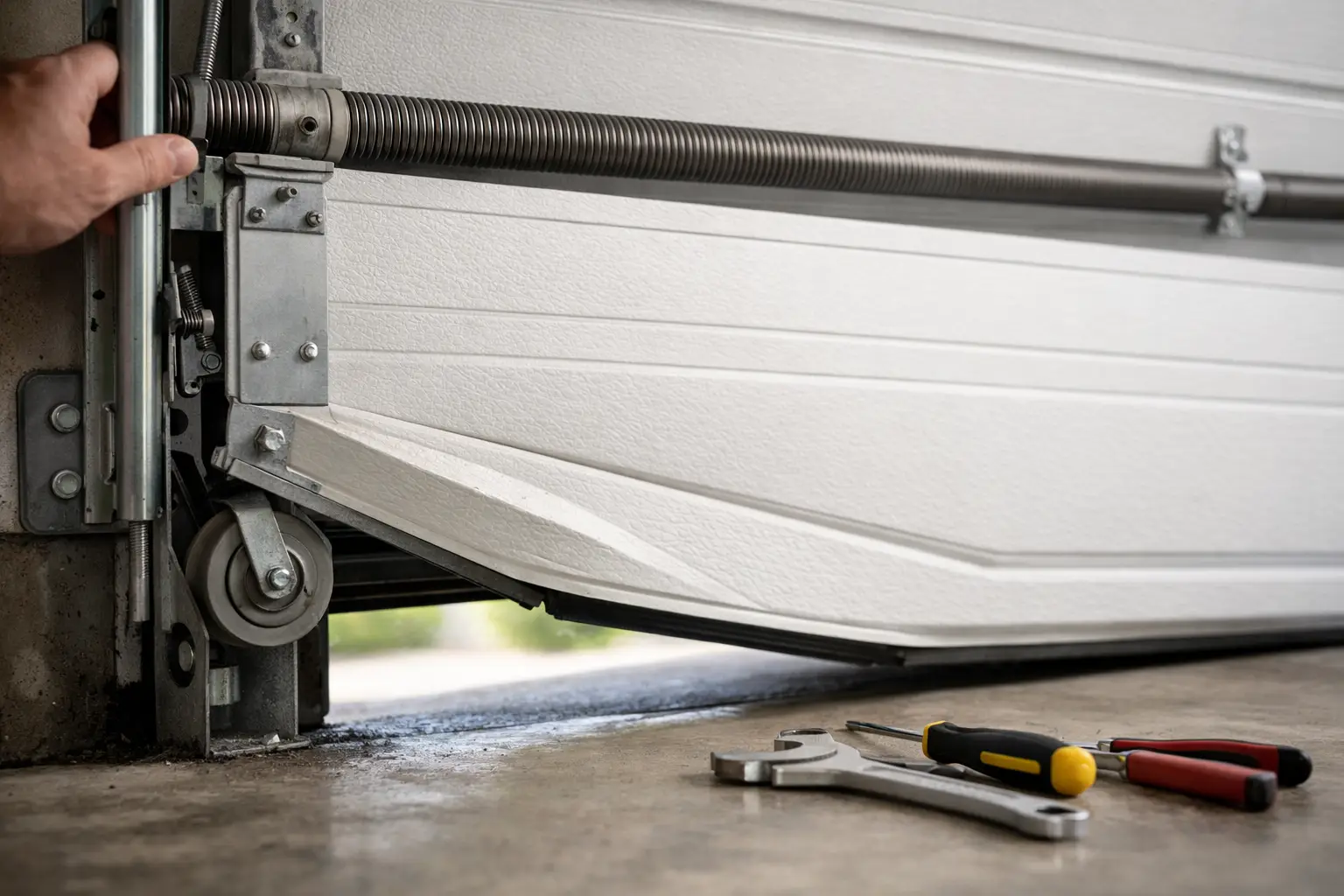
A door can jam when a track is dented inward, pulled away from the wall, or no longer aligned with the opposite side. This often happens after a vehicle lightly bumps the track, a ladder falls against it, or hardware gradually loosens over time. Even a small bend can catch a roller and prevent the door from traveling smoothly.
Warning signs include scraping or grinding sounds, a door that slows at the same spot each time, and rollers that appear to rub hard against one side of the track. A bent track is not always a replacement job. Minor issues may be corrected with a precise adjustment, while severely damaged sections need replacement to restore safe, reliable operation.
3. Worn or broken rollers
Rollers guide the door through its tracks every time it opens and closes. As they wear, they can become noisy, wobble, crack, or bind. Older plastic rollers are especially prone to failure after years of heat and regular use.
If your garage door shakes, squeaks, or moves in a jerky motion before it jams, worn rollers may be part of the problem. Roller replacement is typically straightforward for a trained technician, but some rollers sit near the bottom bracket, where cables and spring tension create a serious safety risk. Those should never be removed as a DIY project.
4. A broken spring or damaged cable
Garage door springs do the heavy lifting. The opener is designed to guide a balanced door, not pull the full weight of a 200- to 400-pound door on its own. When a torsion spring breaks, the door may feel extremely heavy, rise only a few inches, or refuse to open altogether.
You may hear a loud bang from the garage when a spring breaks. Another clear sign is a visible separation in the coil above the door. Extension springs, which run alongside the horizontal tracks on some systems, can also fail or become stretched and uneven.
Cables are equally important. A cable that slips off its drum can make the door tilt to one side and jam in the tracks. Do not pull on a loose cable or try to reset it. Springs and cables store substantial energy, and this repair calls for professional tools, training, and a careful inspection of the entire counterbalance system.
More Door Jam Causes That Start With the Opener
5. Misaligned safety sensors
If the door starts down and immediately reverses, the photo-eye safety sensors may be blocked or out of alignment. These small sensors are mounted near the floor on each side of the opening. They send an invisible beam across the doorway, preventing the door from closing on a person, pet, or object.
Check for boxes, cobwebs, leaves, or dirt in front of the sensors. Gently clean the lenses with a soft cloth and confirm both sensor indicator lights are on. A loose sensor bracket, damaged wire, or direct sunlight can also interfere with the beam. Sensor issues are generally less urgent than a broken spring, but they still deserve attention so the door can close securely.
6. Opener force or travel settings are incorrect
Garage door openers use travel limits to determine where the door should stop and force settings to recognize resistance. If either setting is off, the opener may think the floor is an obstruction, stop before the door is fully open, or reverse unexpectedly.
This problem can develop after a new opener installation, seasonal changes, a door repair, or years of gradual wear. It is tempting to turn adjustment screws until the door moves again, but excessive force settings can defeat an important safety feature. The better approach is to determine why the door is resisting in the first place. A properly balanced, well-maintained door should move smoothly before opener settings are adjusted.
7. Lack of maintenance and normal wear
Many garage door jams are the final result of small issues that have been building for months. Dry rollers, loose bolts, worn hinges, frayed cables, and an unbalanced door all add resistance. Eventually, the opener or track system reaches a point where it can no longer compensate.
A simple visual check every few months can catch problems early. Listen for new noises, watch for uneven movement, and make sure the door closes evenly to the ground. Lubricating moving metal components with a garage-door-approved lubricant can reduce friction, but lubricant will not fix a bent track, worn bearing, broken spring, or failing opener.
What to Do When Your Garage Door Is Jammed
Start by keeping people, vehicles, and pets away from the door. If it is stuck open, do not leave the home unsecured if you can avoid it. If it is stuck partly open or off track, do not attempt to push it closed by hand. Its weight can shift quickly, particularly when a cable or spring has failed.
If the door is fully closed and the issue appears to be a sensor obstruction, you can clear the area and test the door once. For any grinding, crooked movement, broken hardware, or heavy door, stop there. A professional inspection can identify the actual failure and prevent the common mistake of replacing an opener when the real issue is the door’s springs, tracks, or rollers.
For commercial properties, prompt service matters even more. A jammed overhead door can interrupt deliveries, limit employee access, and create a security concern. The correct repair depends on the door’s size, usage cycle, hardware condition, and whether the problem involves the operator or the door itself.
Ranger Garage Door Repair approaches these calls with a full-system inspection, clear recommendations, and quality repairs intended to last. The goal is not simply to get the door moving for the moment. It is to restore safe, smooth operation and give you confidence that the repair was done right the first time.
A garage door rarely jams without giving some warning first. When you hear a new noise, notice uneven travel, or see a roller struggling in the track, addressing it early is usually the safest and most cost-conscious decision.


