
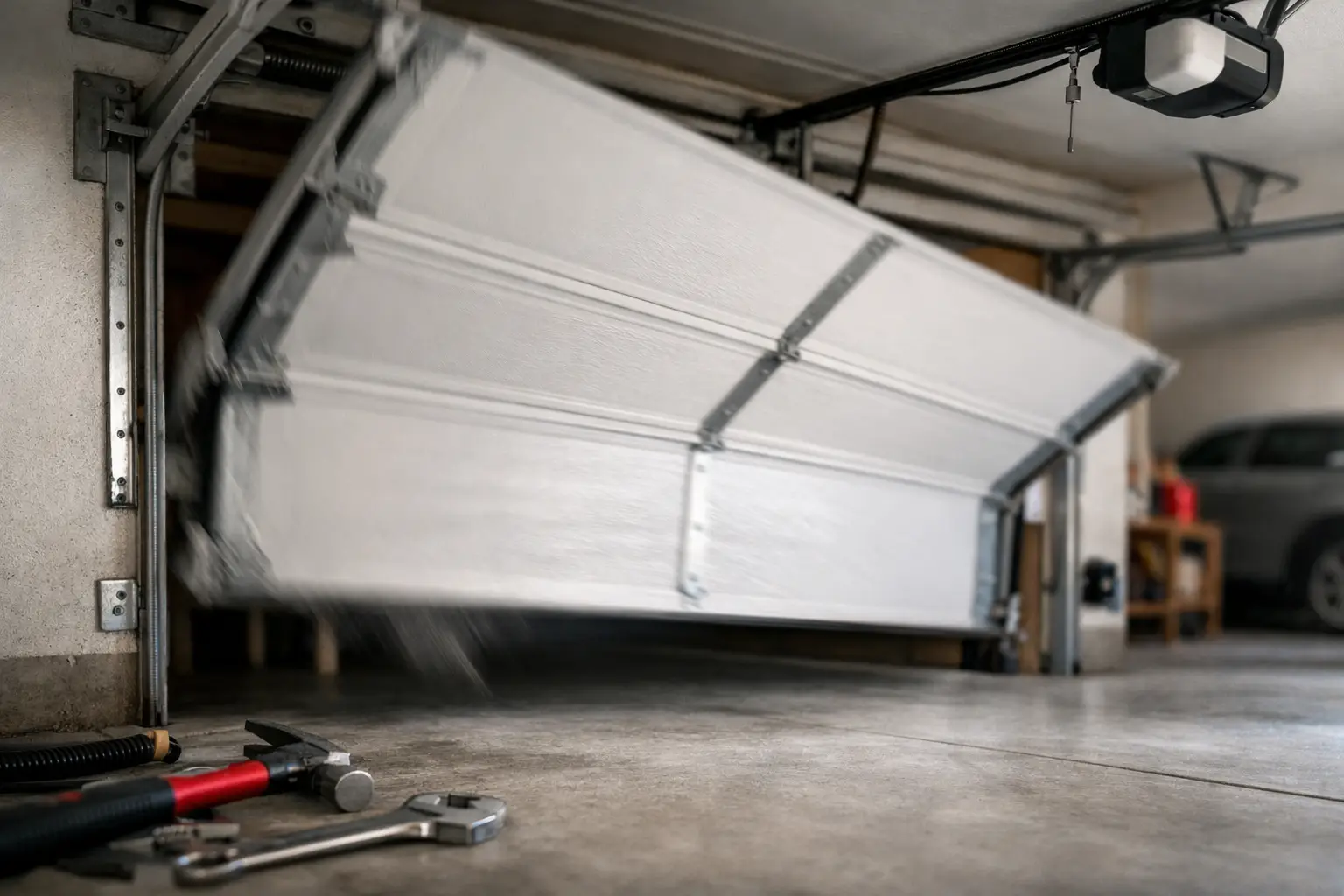
Why Does Garage Door Slam? Causes and Fixes
A garage door should move with controlled, steady weight – not crash down hard enough to shake the walls. If you are asking, “why does garage door slam,” the answer is usually not just an annoying noise. A slamming door can point to a failed spring, an out-of-balance door, a cable problem, or an opener setting that needs attention. Because garage doors are heavy and under high tension, it is worth taking the symptom seriously.
The exact cause depends on when the slam happens. A door that drops hard while closing has different likely issues than one that bangs at the bottom, reverses suddenly, or slams after the opener stops. Here is how to narrow it down safely and decide when professional repair is the right next step.
Why Does a Garage Door Slam When Closing?
In most cases, the door is slamming because the system is no longer controlling its weight correctly. Your garage door springs do the heavy lifting. They counterbalance the door so that the opener only guides it along the tracks rather than carrying the full load.
When a torsion spring breaks or loses tension, the door can become dramatically heavier. It may close faster than normal, hit the floor with a sharp bang, or stop operating altogether. A broken torsion spring often makes a loud pop when it fails, similar to a firecracker or a heavy object striking metal.
Extension springs can create similar problems. These springs run along the horizontal tracks on many older systems. If one is broken, stretched out, or uneven, the door may descend crookedly or come down with too much force on one side.
A failing spring is not a DIY adjustment. Springs store a tremendous amount of energy, and incorrect handling can cause serious injury or property damage. If the door suddenly feels unusually heavy or slams after previously operating normally, stop using it and arrange for a qualified technician to inspect it.
A Door That Is Out of Balance Can Drop Fast
Even if the springs are not visibly broken, they may no longer be properly balanced. Springs gradually weaken with use. Houston heat, regular temperature changes, and years of daily cycles can all contribute to wear.
A balanced door should stay roughly in place when disconnected from the opener and manually raised halfway. If it races downward, shoots upward, or will not stay at the halfway point, the spring tension may be incorrect. This puts extra strain on the opener and can cause the door to slam or land too hard.
Homeowners can observe the door’s behavior, but spring balancing should be left to a professional. The correct tension depends on the actual weight, height, hardware, and spring type of the door. Adding tension without the right tools and training can make the problem more dangerous, not less.
Opener Travel Limits May Be Set Incorrectly
Sometimes the door itself is balanced, but the garage door opener is telling it to travel too far. The opener’s down-travel limit controls where the door stops at the floor. If that setting is off, the opener may continue pushing after the door has already reached the concrete.
That can create a hard bang at the bottom, cause the door to flex, or make it reverse after hitting the floor. You might also notice a gap under the bottom seal one day, followed by excessive pressure against the floor the next.
Modern openers may use manual adjustment dials, buttons, or electronic programming. The right setting should allow the door to close fully and seal against the floor without excessive force. While some owners can follow their opener manual to make a minor adjustment, do not assume travel limits are the only issue if the door is dropping fast, moving unevenly, or making grinding sounds. Those signs call for a full system inspection.
Worn Rollers, Tracks, and Hinges Can Create a Hard Impact
Garage doors rely on rollers, hinges, tracks, and brackets to move smoothly. When rollers are worn, tracks are bent, or hinges are binding, the door may hesitate during travel and then release suddenly. That abrupt movement can sound like a slam even if the problem is not in the springs.
Look for obvious signs without touching any high-tension components: rollers that wobble, tracks with visible dents, loose hardware, metal shavings, or a door that jerks as it moves. Dry rollers and hinges can also create noise, although lubrication alone will not fix worn or damaged parts.
Use only a garage-door-rated lubricant on metal rollers, hinges, and springs when appropriate. Avoid heavy grease, which collects dirt, and never lubricate the tracks themselves. Tracks need to remain clean so the rollers can move through them properly.
If a track is bent or the door is rubbing hard against it, stop operating the door. Forcing it can pull the door off track, damage panels, or put stress on the cables.
Loose or Damaged Cables Need Immediate Attention
Cables work with the springs to lift and lower the door evenly. If a cable frays, comes off the drum, or loses tension, the door can drop unevenly or slam on one side. You may see a cable hanging loose, a gap between the cable and drum, or a door that looks crooked in the opening.
Do not try to put a cable back on yourself. Cables are tied directly to the spring system, and moving the wrong part can release stored tension without warning. Keep people and vehicles clear of the door, leave it in its current position if possible, and call for service.
What to Do When Your Garage Door Slams
First, stop running the door repeatedly. Each cycle can increase the damage, especially if the issue involves a broken spring, cable, track, or opener overload. If the door is fully closed and secure, leave it closed until it can be checked.
If the door is open or partially open, keep children, pets, and vehicles away from the area. Do not stand beneath it, pull on a cable, loosen brackets, or attempt to remove a spring. Avoid disengaging the opener with the emergency release unless you understand that the door may be too heavy to control manually.
You can safely make a few observations for the technician: note whether you heard a loud pop, whether the opener hums but cannot lift the door, and whether the door is crooked or visibly off track. Those details help identify the likely issue and prepare for the right repair.
When the Problem Is the Bottom Seal or Floor
Not every loud close is a mechanical failure. A worn bottom seal can make the door hit concrete more sharply than it once did. An uneven garage floor can also leave one corner unsupported until the last moment, creating a noticeable thud.
This is usually less urgent than a spring or cable failure, but it still deserves attention. A new bottom seal can improve the fit, keep out water and pests, and reduce the impact at closing. If the floor has settled significantly, the door may need careful adjustment to close securely without being forced down against the concrete.
Preventing a Garage Door From Slamming Again
Regular maintenance is the best way to catch wear before it becomes an urgent repair. A professional tune-up includes checking spring balance, cable condition, roller wear, hinges, track alignment, opener force settings, safety sensors, and hardware. Small adjustments at the right time can protect the door, opener, and the people using it.
For homeowners, a monthly visual check is enough. Watch the door complete a full open-and-close cycle. It should move evenly, without jerking, dragging, excessive vibration, or sharp impacts. Test the photo-eye safety sensors according to your opener manufacturer’s instructions, and listen for changes in the normal sound of operation.
A garage door that slams is asking for attention before a minor issue turns into a stuck door, damaged opener, or safety concern. Ranger Garage Door Repair approaches these calls with a straightforward goal: identify the true cause, explain the options clearly, and make the repair right the first time. A controlled, quiet close is not just a convenience – it is a sign that your door is operating safely.


