
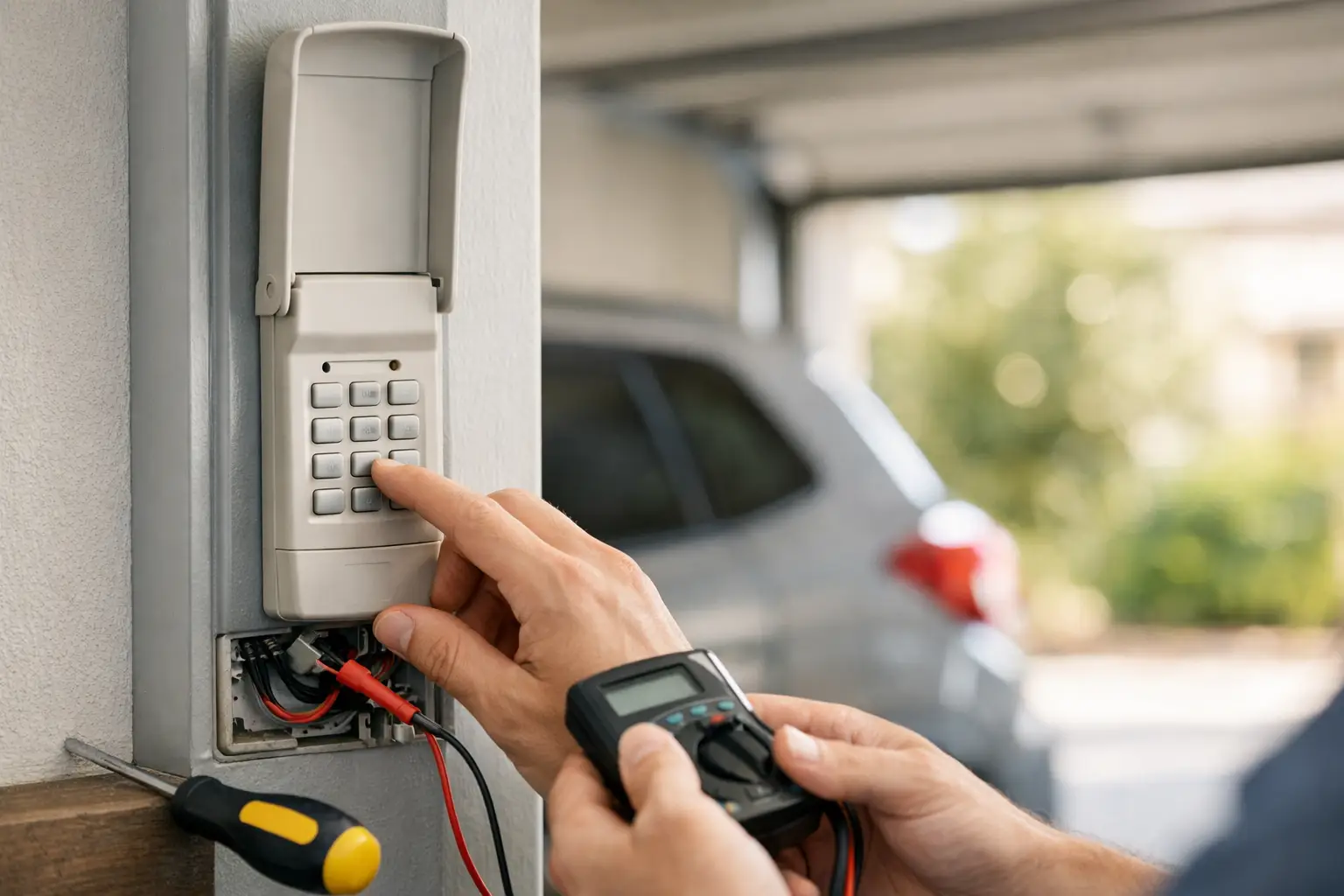
Garage Keypad Troubleshooting That Restores Access
A garage keypad usually fails at the worst possible moment: when you are returning home with groceries, trying to leave for work, or letting a family member in. The good news is that garage keypad troubleshooting often starts with a few simple checks. The key is knowing which issues are safe to handle yourself and which ones point to an opener, wiring, or door problem that needs professional attention.
Start by noticing exactly what happens when you enter the code. Does the keypad light up but the door does nothing? Does it flash or beep after a correct code? Is the keypad completely dark? Those details help narrow down the cause and prevent unnecessary repairs.
Start With the Most Common Keypad Problems
A wireless keypad communicates with the garage door opener through a radio signal. For that process to work, the keypad needs power, the opener needs power, the code must be programmed correctly, and the opener must be able to receive the signal. A failure in any one of those areas can leave you standing outside a closed garage door.
Before changing settings or attempting to reprogram anything, test the door using the wall button inside the garage and a handheld remote, if available. If the wall button and remote both operate the door normally, the problem is likely isolated to the keypad. If neither works, focus on the opener power supply, safety sensors, or the door system itself.
Replace the Battery First
A weak keypad battery is the most common and least complicated cause of a keypad failure. Houston heat, humidity, and sudden temperature changes can shorten battery life, especially on a keypad mounted in direct afternoon sun.
Open the keypad battery compartment and install a fresh battery of the correct type. Do not rely on a battery taken from another device just because it appears to have some charge left. A keypad may still light up with a weak battery but lack enough power to send a dependable signal to the opener.
After replacing the battery, close the compartment securely and test the keypad several times. If it works once and then becomes inconsistent, inspect the battery contacts for corrosion, looseness, or moisture.
Check Whether the Opener Has Power
If the keypad has power but the door will not respond, look at the garage door opener unit. Confirm that it is plugged in and that its outlet has power. A tripped GFCI outlet, a breaker issue, or an unplugged power cord can stop the opener without any obvious warning.
If the opener has no lights, no sound, and no response from the wall control, the keypad is not the source of the problem. Reset the applicable breaker once if it has tripped. If it trips again, leave it alone and schedule service. Repeated electrical trips can signal a wiring or opener issue that should not be handled by trial and error.
Make Sure Lock Mode Is Not On
Many wall-mounted garage door controls have a lock or vacation mode. When that feature is active, it disables wireless remotes and keypads while the wired wall button continues to work. This is useful when you are away from home, but it can be activated accidentally.
Look for a lock symbol, an LED indicator, or a button marked “Lock” on the wall control. The exact method for turning the feature off varies by manufacturer, so use the instructions printed on the control or in the opener manual. Once lock mode is off, test the keypad again before changing its code.
When the Code Is No Longer Recognized
If the keypad lights up and flashes after you enter a code, it may have lost its programming. This can happen after a dead battery, a power outage, an opener reset, or an accidental press of the keypad’s program button.
Reprogramming can solve the issue, but follow the instructions for your exact opener and keypad model. The steps differ among LiftMaster, Chamberlain, Genie, Craftsman, and other systems. Guessing at a generic sequence can erase working remotes or create more confusion.
In most cases, you will use the opener’s learn button and then enter a new personal identification number on the keypad within a short time window. Before you begin, make sure you can access the garage through another door. Some programming attempts may temporarily disable keypad access until the process is completed correctly.
Choose a code that is easy for your household to remember but not obvious to others. Avoid addresses, birthdays, or simple sequences such as 1234. If contractors, tenants, or a former resident had the old code, create a new one rather than trying to preserve the old setup.
Garage Keypad Troubleshooting for Intermittent Failures
An intermittent keypad can be more frustrating than one that fails completely. It works on Monday, ignores you on Tuesday, then opens the door perfectly when a technician arrives. That pattern usually points to battery weakness, signal interference, weather exposure, or a keypad that is nearing the end of its service life.
Test Your Distance and Position
Stand close to the garage door and enter the code slowly. If the keypad works only at close range, the signal may be weak or blocked. Metal siding, foil-backed insulation, nearby electronics, LED lighting, or a recently installed device can sometimes interfere with wireless communication.
Also check whether the opener antenna is hanging freely beneath the motor unit. Do not cut, tape, or modify it. If the antenna is damaged, tucked into the opener housing, or affected by a larger opener problem, a technician can identify the cause safely.
Look for Weather and Wear Damage
Outdoor keypads take a daily beating. Sun exposure can make plastic brittle, rain can enter cracked housings, and repeated use can wear down individual buttons. A button may look normal but fail to make reliable contact inside the keypad.
Signs that replacement is usually the better option include faded or cracked buttons, a loose faceplate, visible corrosion, water inside the battery compartment, or keys that respond only when pressed hard. Replacing an aging keypad is often more reliable and more cost-effective than repeated reprogramming attempts.
Avoid spraying the keypad with lubricant, household cleaner, or water. These products can damage the internal contacts or push moisture deeper into the unit. A dry microfiber cloth is generally enough for routine cleaning.
Do Not Mistake a Door Problem for a Keypad Problem
Sometimes the keypad is doing its job, but the opener cannot safely move the door. If you hear the opener hum, click, or begin to run after entering the code, yet the door does not open, stop using the keypad as a test tool.
A broken spring, damaged cable, off-track roller, seized door section, or opener force issue may be preventing movement. Garage door springs and cables are under extreme tension. They are not a safe DIY repair, and forcing the opener can turn a manageable repair into a damaged opener, bent track, or unsafe door.
The same applies if the door starts down and immediately reverses. First, check that nothing is blocking the safety sensors near the bottom of the tracks. Wipe the sensor lenses gently and make sure both sensor lights are illuminated and aligned. If the sensors appear normal but the problem continues, professional diagnosis is the safer next step.
When to Call a Garage Door Professional
Call for service when a fresh battery, power check, lock-mode check, and model-specific reprogramming do not restore dependable keypad operation. You should also schedule service if the opener makes unusual sounds, the door is heavy or uneven, a cable is loose, or the keypad problem follows water damage or an electrical event.
A qualified technician can test the keypad signal, inspect the opener receiver, confirm safety sensor operation, and check whether the door is balanced properly. That matters because a keypad replacement alone will not solve a door that is overloading the opener. At Ranger Garage Door Repair, the goal is to identify the actual cause, explain the options clearly, and make the repair right the first time.
For property managers and business owners, keypad issues may involve more than a single personal code. Multi-user access systems, gate controls, commercial operators, and tenant turnover require a more deliberate approach. Document authorized codes, remove old access promptly, and consider a system that supports controlled user access rather than sharing one permanent code.
Keep Your Keypad Reliable
A little preventive care goes a long way. Replace keypad batteries on a regular schedule, especially before the hottest part of the Houston summer. Keep the keypad housing clean and secure, update the code when household access changes, and test the keypad occasionally before you need it in a hurry.
Your garage keypad should provide convenient, dependable access to your home, not become another source of stress at the end of a long day. If a few careful checks do not solve the problem, choosing a professional inspection protects your door, your opener, and your peace of mind.


