
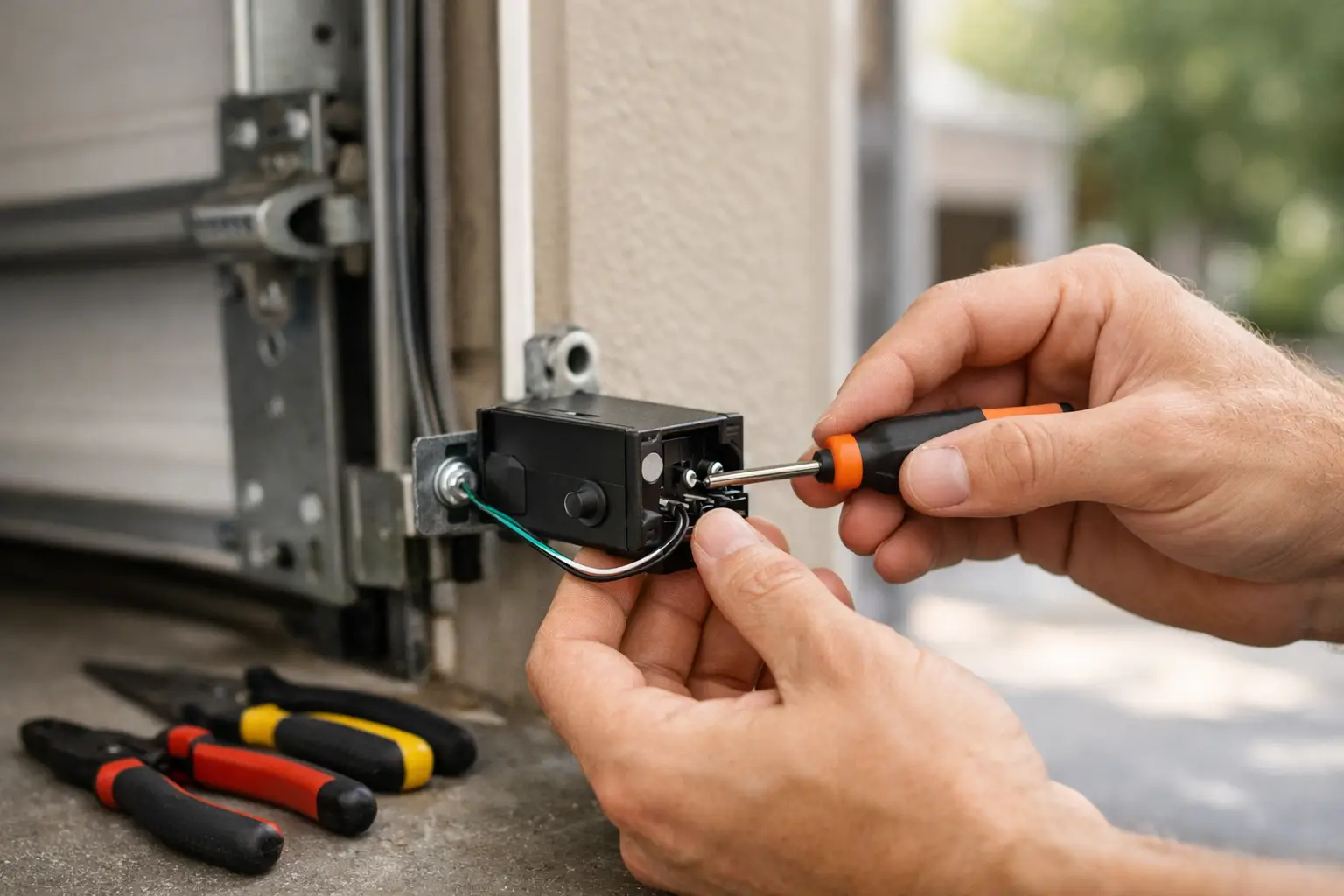
Garage Door Safety Sensor Replacement Guide
A garage door that starts down, then reverses for no clear reason, is not just frustrating when you are trying to leave for work. It is often a sign that the opener’s safety system is doing its job or that it cannot confirm the doorway is clear. Garage door safety sensor replacement may be the right fix, but a loose wire, dirty lens, or simple alignment issue can create the same symptoms. The goal is to identify the real cause before replacing parts.
Safety sensors are small, but they protect one of the heaviest moving systems in your home. A properly working pair helps prevent the garage door from closing on a child, pet, vehicle, or anything else in its path. That is why this is a repair worth handling carefully and correctly.
What Garage Door Safety Sensors Do
Modern residential garage door openers use two photo-eye sensors mounted near the bottom of the door tracks, usually four to six inches above the floor. One sensor sends an invisible infrared beam across the opening; the other receives it. When the beam is aligned and uninterrupted, the opener can close the door normally.
If an object breaks that beam while the door is closing, the opener should reverse or stop. If the sensors cannot see each other because they are blocked, misaligned, damaged, or disconnected, most openers will refuse to close with the wall button unless you hold the button down continuously. The remote may not close the door at all.
This safety feature is required for a reason. Bypassing it, taping wires together, or permanently holding the wall control to force the door shut is not a safe solution. It can leave your family, pets, and property unprotected.
Signs You May Need Sensor Replacement
A sensor problem does not always mean the sensors themselves have failed. In Houston, heat, humidity, heavy rain, lawn equipment, and everyday garage traffic can all affect sensor performance. Start by looking for the pattern.
You may be dealing with a sensor-related issue if the door begins closing and immediately reverses, the opener lights blink after a failed closing attempt, or one sensor’s indicator light is off, dim, or flickering. A door that closes only when the wall button is held down is another common clue.
Physical damage is the clearest reason to replace a sensor. The plastic housing may be cracked, the lens may be broken, or the mounting bracket may be bent after being hit by a bicycle, trash bin, car bumper, or pressure washer. Corroded terminals and chewed wiring can also make a replacement necessary.
A professional diagnosis matters because several other opener problems can look similar. A door binding in the tracks, a poorly adjusted close-force setting, or a failing opener control board may cause reversing as well. Replacing sensors without checking the full system can solve nothing and add unnecessary cost.
Check These Simple Issues First
Before scheduling a garage door safety sensor replacement, there are a few safe checks homeowners can make from the ground. Do not climb ladders, remove opener covers, or handle damaged wiring if you are not comfortable doing so.
First, clear the area between the sensors. Leaves, cobwebs, storage bins, and even a low-hanging extension cord can block the beam. Wipe each lens gently with a soft, clean cloth. Avoid harsh cleaners that may cloud the lens.
Next, look at the indicator lights. Their color and behavior vary by manufacturer, but a steady light generally means the sensor has power and is aligned. A blinking or unlit light often points to misalignment, an obstruction, or a wiring issue. Check the opener manual if you still have it, since the light codes are brand-specific.
Then inspect the sensor brackets. Both photo eyes should face each other at the same height and remain securely attached to the track or wall. A small bump can move one sensor just enough to lose the beam. If a bracket is loose but undamaged, gently repositioning it may restore operation.
Finally, look for obvious wire damage along the lower tracks and ceiling path. Keep in mind that a wire can be broken inside its insulation, especially where it has been pinched or exposed to moisture. If the wiring looks compromised, it is best to have a technician test it rather than guess.
When Replacement Is the Right Call
Replacement is usually the right choice when a sensor is physically damaged, will not illuminate after alignment and wiring checks, or repeatedly fails despite a sound installation. Sensors are designed as a matched pair, and compatibility matters. A replacement that looks similar may not communicate correctly with your specific opener.
The best approach depends on the age and condition of the system. On a newer opener with clean, intact wiring, replacing the failed sensor pair is often straightforward and cost-effective. On an older system with brittle wiring, water damage, or repeated intermittent failures, replacing the sensors and wiring together may provide a more dependable repair.
This is also a good time to check the sensor location. In garages that flood during hard rain or collect windblown debris, a slightly more protected mounting arrangement may reduce future trouble. The sensors must still remain low enough to meet safety requirements and maintain a clear line across the opening.
For commercial properties, the decision can be more involved. A warehouse, auto shop, or shared parking facility may use multiple doors, vehicle traffic, and access-control equipment that place added strain on the safety system. A technician should verify the entire closing cycle, not just replace a sensor and leave.
Why Proper Installation Matters
Installing garage door safety sensors is not complicated in every case, but precision makes the difference between a quick repair and a recurring problem. The sensors need secure brackets, correct alignment, reliable low-voltage connections, and a complete safety reversal test after installation.
A trained technician will inspect the sensor beam, test the wiring from the opener to both photo eyes, confirm the door moves smoothly, and verify that the opener reverses when the beam is interrupted. They should also test the door’s contact reversal function using an appropriate object on the floor. Both safety systems matter.
There is a trade-off between a low-cost do-it-yourself replacement and professional service. If the issue is clearly a cracked sensor and you have the exact compatible part, a careful homeowner may be able to replace it. But if the lights remain inconsistent, the door reverses unpredictably, or wiring is involved, professional service is the safer and more efficient path.
At Ranger Garage Door Repair, the focus is on finding the actual cause, explaining the options clearly, and completing the repair with quality parts and careful testing. No homeowner should be pressured into an opener replacement when an honest sensor or wiring repair will restore safe operation.
Preventing Future Sensor Problems
Sensor maintenance takes only a few minutes but can prevent the inconvenience of a door that will not close when you need it to. Keep the lower track area clear, especially after yard work or storms. Clean the lenses periodically, check that brackets have not shifted, and avoid storing items where they can bump the sensors.
During a regular garage door tune-up, have the technician inspect the photo eyes, wiring, door balance, rollers, tracks, springs, and opener safety settings. Sensors do not operate in isolation. A door that is heavy, off track, or binding can place added stress on the opener and create problems that are easy to mistake for sensor failure.
If your garage door will not close safely, do not treat it as a minor inconvenience. Secure the opening if you can do so without forcing the system, keep children and pets away from the door, and arrange a proper inspection. A correctly working safety system brings back more than convenience – it gives you confidence every time that door comes down.


