
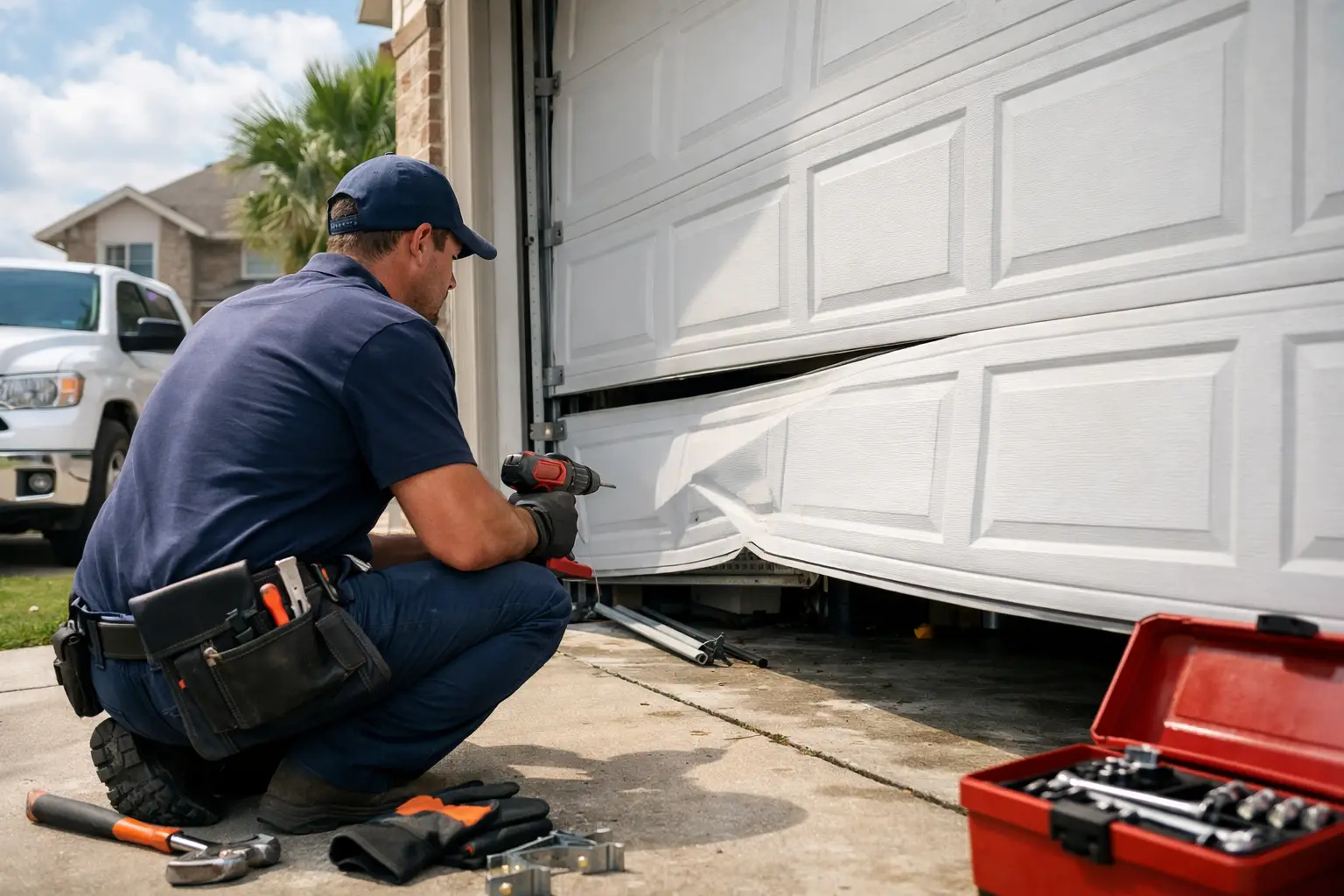
Emergency Garage Repair Guide for Houston Homes
A garage door that will not close at 10 p.m., hangs crooked in the opening, or traps your car inside is more than an inconvenience. It can affect your family’s safety, your home’s security, and your ability to get to work or respond to an urgent situation. This emergency garage repair guide explains what to do first, what not to touch, and when it is time to call a trained technician.
First, Make the Area Safe
Before diagnosing the door, keep people, pets, and vehicles clear of the opening. A typical residential garage door can weigh 150 to 300 pounds, and its springs and cables are under significant tension. A door that looks only slightly uneven can move unexpectedly.
If the door is stuck open and safe to leave where it is, secure the garage from inside the home if possible. Move bikes, tools, lawn equipment, and valuables away from the opening. If your garage connects directly to your house, lock the interior entry door as an added layer of security.
If the door is partly open, crooked, or making sharp popping or grinding noises, do not try to force it closed. Do not stand or drive beneath it. Keep children away from the wall button and remote controls until the issue has been assessed.
If the opener is running but the door does not move, release the wall control or unplug the opener after the door has stopped. This prevents someone from repeatedly activating a system that may be jammed. Never unplug an opener while it is actively lifting or lowering the door.
Problems That Need Emergency Garage Door Repair
Some garage door issues can wait for a scheduled appointment. Others create an immediate safety, security, or access concern. The difference matters because attempting a temporary fix on the wrong problem can make the repair more expensive and more dangerous.
Call for prompt professional help when you see any of these conditions:
- The garage door is off its tracks, leaning, or stuck at an angle.
- A torsion spring is broken, often marked by a loud bang and a door that suddenly feels extremely heavy.
- A lift cable is loose, frayed, snapped, or wrapped around a drum.
- The door will not close or reverse properly, leaving your home or business unsecured.
- A vehicle, person, or essential equipment is trapped inside the garage.
- Storm damage has bent panels, damaged tracks, or left the door unable to operate safely.
For Houston property owners, severe weather can turn a small garage door issue into an urgent one. Wind-driven debris, flooding near the threshold, and power outages can all affect operation. After a storm, avoid cycling the door repeatedly if you see bent metal, water around electrical components, or debris in the tracks.
A Broken Spring Is Not a DIY Repair
Springs do the heavy lifting. When one breaks, the opener may hum, strain, or lift the door only a few inches before stopping. Homeowners sometimes assume the opener has failed because it is the part making noise. In many cases, the opener is working exactly as designed by refusing to lift a door that has become too heavy.
Do not remove spring hardware, loosen winding cones, cut cables, or use improvised tools to tension a spring. Springs can release stored energy without warning, causing serious injury or damage. A qualified technician has the proper winding bars, replacement parts, and process to restore balanced operation safely.
An Off-Track Door Should Stay Put
A garage door can come off track after being bumped by a vehicle, hit by debris, or pulled unevenly when a cable slips. The rollers may appear close enough to guide back into place, but that does not mean the door is stable. Moving it manually can bend the track further or cause the full weight of the door to shift.
Leave the door in its current position whenever possible, keep the opening clear, and schedule emergency service. A technician can stabilize the door, inspect rollers and cables, realign the track, and identify why it came loose in the first place.
What You Can Safely Check Before Calling
A few simple observations help you describe the issue clearly. They do not replace a professional inspection, but they can speed up diagnosis and help you avoid unnecessary frustration.
Start by checking whether the opener has power. Look for a lit outlet, a tripped GFCI outlet in the garage, or a breaker that has switched off. If your opener has a battery backup, it may still work during an outage, but the battery could be depleted.
Next, look at the photo-eye sensors near the bottom of each track. If the door starts down and reverses immediately, make sure nothing is blocking the opening. Wipe the sensor lenses gently and check whether both sensors are aligned and showing their normal indicator lights. A misaligned sensor is common and usually not dangerous, but do not adjust the sensors if the door is already off track or the cables appear damaged.
You can also listen for clues. A single loud bang may point to a broken spring. Repeated clicking can indicate an opener problem. Grinding, scraping, or metal-on-metal sounds often suggest roller, track, cable, or alignment trouble. Note what happened immediately before the failure, such as a power outage, storm, vehicle impact, or repeated noisy operation.
If it is safe to do so, take a few photos from several feet away. Do not climb a ladder or stand near a hanging cable to get a closer picture. Clear photos of the full door, tracks, springs, and opener can help a service professional arrive prepared.
Should You Use the Emergency Release Cord?
The red emergency release cord disconnects the door from the opener so it can be operated manually. It is useful during a power outage only when the door is fully closed and appears balanced and undamaged.
Do not pull the release cord if the door is open, partially open, crooked, off track, or suspected of having a broken spring. Without the opener holding it, an unbalanced door can fall quickly. This is one of the most common situations where a well-meaning homeowner gets hurt.
If the door is closed, the springs appear intact, and you need to leave during a power outage, disengaging the opener may allow you to lift the door manually. It should move smoothly and remain in place when raised about halfway. If it feels unusually heavy, binds, or will not stay up, stop immediately and call for service.
Protect Your Home While You Wait
If the garage door is open and cannot be closed, your priority is security. Park another vehicle in front of the opening if it can be done without blocking emergency access or violating neighborhood rules. Keep the door between your home and garage locked, turn on exterior lighting, and avoid leaving valuables visible.
Do not try to brace a failing door with lumber, clamps, rope, or a vehicle. Those temporary measures can interfere with a safe repair and may create a falling hazard. If weather is moving in, remove loose items from the garage floor and place towels at the threshold only if doing so does not require working beneath or beside an unstable door.
For commercial properties, notify employees or tenants that the affected bay is out of service. Use cones or barriers to keep traffic away, especially around loading areas. A damaged commercial door can disrupt deliveries and access, but safety comes before restoring operations quickly.
What a Professional Emergency Visit Should Include
A dependable emergency repair is more than getting the door to move once. The technician should identify the root cause, inspect the related components, and explain the options in plain language. For example, a broken spring can place extra stress on cables, rollers, bearings, and the opener. Replacing only the visibly broken part without checking the system may leave another issue behind.
Expect a technician to assess spring balance, track alignment, cables, rollers, hinges, safety sensors, opener settings, and the condition of the door sections. You should receive a clear recommendation before work begins, including whether a repair is appropriate or whether replacement is the safer long-term choice.
At Ranger Garage Door Repair, the goal is to restore safe access with premium-quality parts and workmanship done right the first time, not to pressure homeowners into repairs they do not need. A good technician will also show you what failed and explain how to operate the door safely after service.
Reduce the Chances of Another Emergency
Most garage door emergencies give early warnings. Squeaking, shaking, slow movement, a door that reverses unexpectedly, or an opener that sounds louder than usual are all reasons to schedule service before a complete failure. Annual professional maintenance is especially worthwhile for doors that are used several times a day, exposed to Houston heat and humidity, or serving a busy commercial property.
Between visits, keep the tracks clear, test the photo-eyes monthly, and watch the door as it moves. Do not lubricate plastic rollers or add grease to the tracks. Garage door lubricant belongs on appropriate moving metal parts, and the right product matters.
When your garage door fails unexpectedly, the safest decision is usually the simplest one: protect the area, avoid high-tension parts, and get a clear professional assessment. A properly repaired door should leave you with more than a working opener or a closed opening. It should leave you confident that your home is secure and your family can use the garage safely again.


