
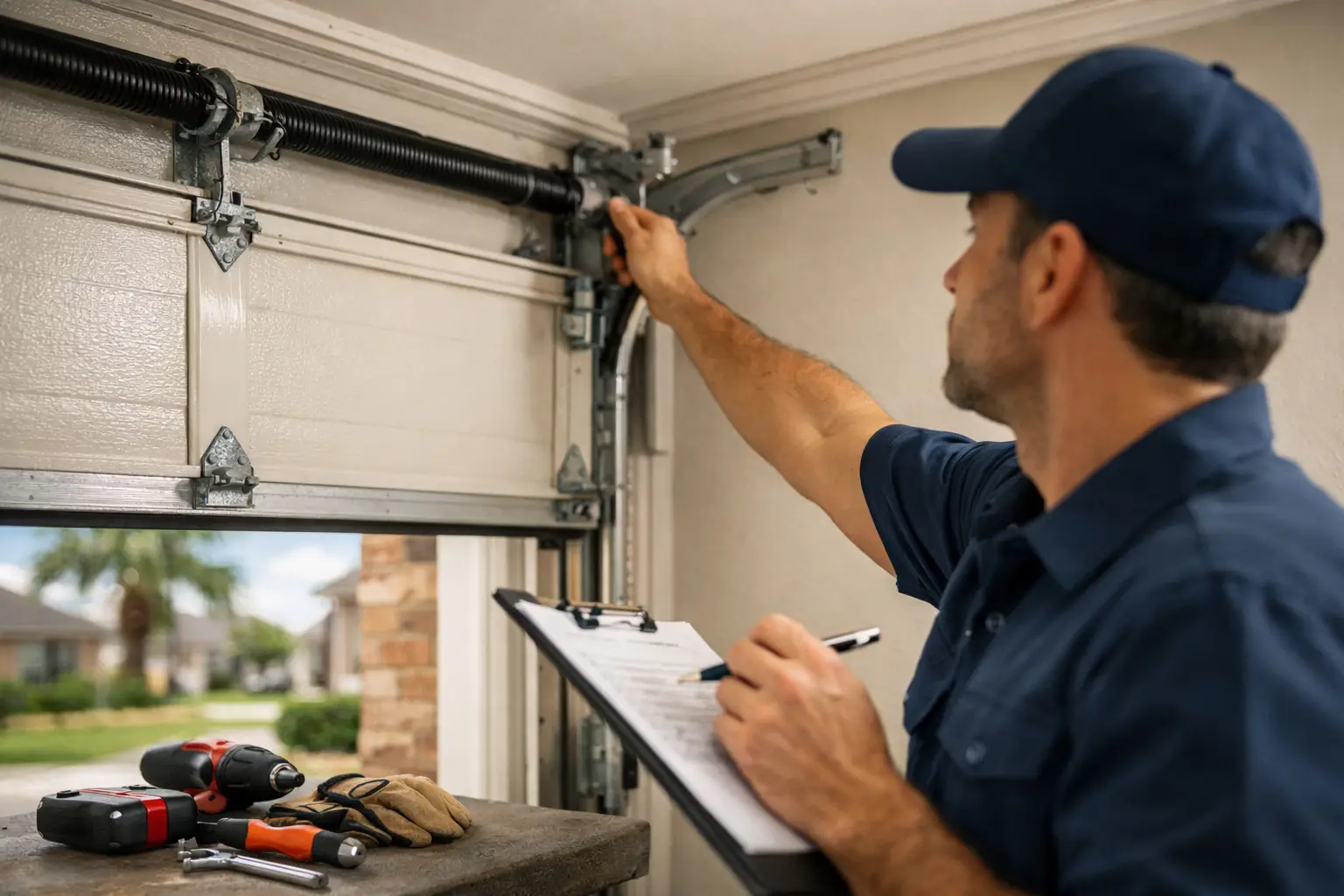
Garage Door Maintenance Checklist for Houston Homes
A garage door can weigh several hundred pounds, move multiple times each day, and still be easy to overlook until it stops halfway or makes a sound that does not belong. A practical garage door maintenance checklist helps you catch small issues before they become a broken spring, damaged opener, or door that will not close when you need it to.
For Houston-area homes, maintenance matters even more. Heat, humidity, wind-driven rain, and everyday use can wear down moving parts faster than many homeowners expect. Most of the checks below take only a few minutes. The key is knowing what you can safely inspect yourself and when to call a trained technician.
Your Garage Door Maintenance Checklist
A good inspection starts with the door closed and the opener unplugged if you will be working near moving parts. Do not attempt to adjust springs, cables, or bottom brackets. Those components are under extreme tension and can cause serious injury when handled incorrectly.
Listen to the door during a full cycle
Open and close the garage door from inside the garage. Listen for scraping, grinding, popping, rattling, or a loud bang. A properly operating door should move steadily with a consistent sound from start to finish.
A brief squeak may simply point to dry rollers or hinges. Grinding can indicate worn rollers, track problems, or an opener working harder than it should. If the door jerks, shakes, or pauses during travel, stop using it if possible and have it inspected. Continuing to run a struggling door can turn a manageable repair into damage to panels, tracks, or the opener.
Look over the springs, cables, rollers, and hinges
With the door closed, visually inspect the hardware on both sides. Look for frayed lifting cables, loose or missing fasteners, cracked rollers, bent hinges, and gaps in the torsion spring above the door. Extension springs, if your system has them, should have safety cables running through their centers.
Do not touch a damaged cable or spring. A cable may appear to be a simple rope, but it carries the force required to lift the door. If you see fraying, slack, or a cable off the drum, schedule professional service promptly. The same goes for a spring with a visible separation in its coils.
Check that roller brackets and hinge hardware appear secure. You can gently tighten accessible nuts and bolts on the door and track supports if they are loose, but avoid the bottom roller brackets. Those brackets are connected to the lift cables and should be serviced by a professional.
Inspect the tracks without trying to straighten them
Look along the vertical and horizontal tracks for dents, loose mounting brackets, debris, or obvious misalignment. The tracks should be clear and firmly attached to the wall and ceiling. A bent track or one pulling away from its support can cause the door to bind or come off track.
Use a dry cloth or soft brush to remove dirt and cobwebs. Do not coat the tracks with grease or heavy lubricant. That often attracts dust and grit, which can make movement worse. If the tracks are bent, the rollers are riding unevenly, or the door is rubbing against a track, leave the correction to a technician.
Lubricate the moving metal parts
A small amount of garage-door-specific lubricant can reduce noise and help parts move smoothly. Apply it sparingly to steel rollers, hinges, bearings, and the torsion spring coils. Wipe away excess so it does not drip onto the door or floor.
Nylon rollers are a common exception. Lubricate their bearings only if they have exposed bearings, not the nylon wheel itself. Avoid using heavy grease, and do not spray lubricant on the opener belt, chain, tracks, or plastic components unless the manufacturer specifically recommends it.
In Houston’s humid climate, a seasonal light lubrication is often more useful than applying too much product once a year. More lubricant is not better. Clean, properly aligned hardware is what keeps a door quiet and dependable.
Test the door balance
An unbalanced door puts unnecessary strain on the opener. To perform a basic balance check, close the door, disconnect the opener using the emergency release handle, and carefully lift the door by hand to about waist height. It should stay roughly in place rather than falling closed or shooting upward.
If the door feels unusually heavy, will not stay open, or moves unevenly, reconnect the opener and arrange service. Do not try to adjust the spring tension yourself. Balance issues are usually related to springs, cables, or other lifting hardware, and precision matters.
Test the opener safety features
Every automatic garage door opener should have two safety systems: photo-eye sensors and an auto-reverse function. Test both monthly.
First, close the door using the wall button or remote. Wave a long-handled object in front of the photo-eye beam near the floor. The door should stop and reverse. If it does not, clean the sensor lenses with a soft cloth and make sure both sensors are aligned and their indicator lights are on.
Next, place a piece of wood, such as a 2-by-4 laid flat, in the center of the door opening. Close the door. When it contacts the board, it should reverse immediately. If it continues to press down, stop using the opener until it is adjusted and tested by a qualified professional.
Do not skip these tests because the door seems to be working normally. Safety sensors are there to protect children, pets, vehicles, and anyone walking through the opening.
Check the weather seal and door panels
Inspect the rubber seal along the bottom of the door and the perimeter weatherstripping around the frame. Look for cracks, flattened areas, gaps, or sections pulling loose. A worn seal lets in water, insects, dust, and hot outdoor air. It can also leave your garage more vulnerable during heavy rain.
Check the inside and outside of the door panels for rust, cracking, dents, peeling paint, or loose insulation. For steel doors, address chips in the finish before rust spreads. For wood doors, look closely for swelling, soft spots, or peeling paint caused by moisture. Cosmetic damage is not always urgent, but a cracked or weakened panel can affect the way the entire door travels.
Confirm remotes, keypad, and backup access work
Test each remote, keypad, wall control, and vehicle-integrated opener you rely on. Replace weak batteries before they fail at the worst possible time. If your opener has battery backup, test it according to the manufacturer’s instructions.
Make sure everyone in the household knows how to use the emergency release in a power outage, but explain that it should only be used when the door is fully closed whenever possible. Pulling the release on an open, unbalanced door can allow it to fall quickly.
How Often Should You Maintain a Garage Door?
A quick visual and safety inspection once a month is a smart habit. Lubrication, weather seal checks, and a more complete inspection can typically be done every six months. Homes with frequent daily cycles, oversized doors, wood doors, or commercial-style equipment may need attention more often.
Professional tune-ups are usually worthwhile once a year. A trained technician can measure spring condition, inspect cable drums, assess roller wear, check opener force settings, and identify issues that are not obvious during a homeowner inspection. This is especially valuable if the door is noisy, more than several years old, or exposed to harsh weather.
Signs It Is Time to Call for Service
Some garage door concerns should not wait for the next maintenance day. Call for professional help if the door will not open, comes off track, hangs unevenly, has a broken spring, has a frayed cable, or closes without reversing when obstructed.
You should also schedule service if the opener hums but the door does not move, the door slams shut, or you notice a new gap in a torsion spring. These are not problems to solve with extra force from the opener. They are signs that a critical component may have failed.
For homeowners who prefer a thorough inspection without guessing at the details, Ranger Garage Door Repair can assess the full system and explain what is needed, what can wait, and why. The goal is straightforward: safe operation, honest recommendations, and work done right the first time.
A few minutes of attention can make a real difference, but never take chances with a heavy door or high-tension hardware. If something looks wrong or does not sound right, trust that instinct and have it checked before the next trip in or out of the garage.


