
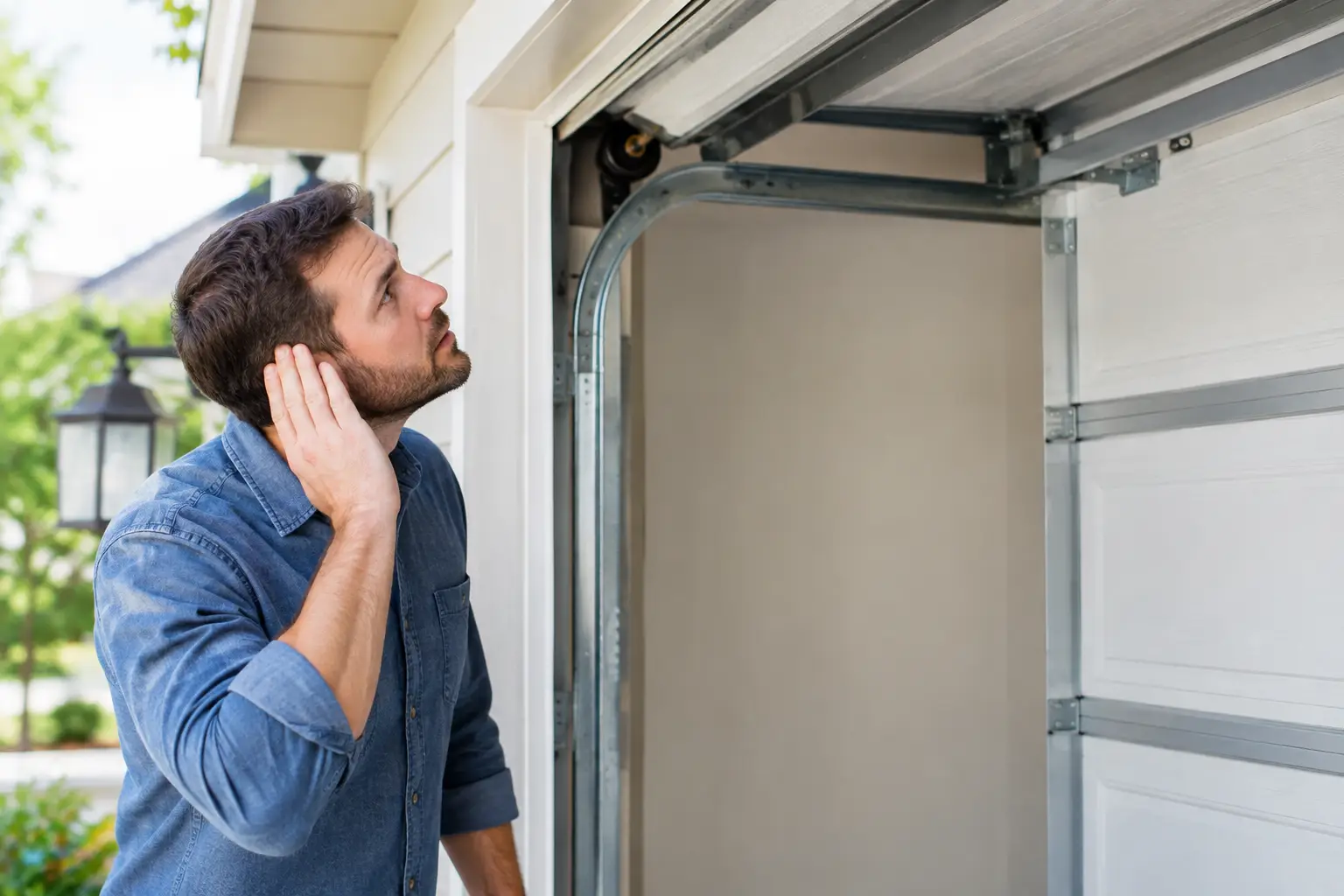
Garage Door Noise Diagnosis Guide for Homeowners
That sharp bang when the garage door opens, a grinding sound near the motor, or a rattle that wakes the household at 6 a.m. can make any homeowner wonder what is about to fail. A garage door noise diagnosis guide helps you separate normal operating sounds from warnings that deserve prompt attention. The goal is not to turn you into a garage door technician. It is to help you recognize what you are hearing, protect your door from further damage, and know when it is safer to stop using it.
A garage door is a heavy moving system with springs, cables, rollers, hinges, tracks, and an opener all working together. In Houston’s heat and humidity, lubrication can dry out, metal can expand, and small alignment issues can become louder quickly. The sound alone does not always identify the exact repair, but where and when the noise occurs provides useful clues.
Start With a Safe Listening Check
Before inspecting anything, stand inside the garage with the door fully closed. Run the door through one complete open-and-close cycle while watching from a safe distance. Listen for whether the sound happens at the beginning, middle, or end of travel. Also note whether it comes from the tracks, the door sections, the spring area above the door, or the opener on the ceiling.
Do not stand under a moving door, touch springs or cables, or try to tighten hardware while the system is under tension. If the door is crooked, moving unevenly, hanging from a cable, or making a violent bang, stop operating it. A garage door can weigh several hundred pounds, and the spring and cable system stores significant energy.
Garage Door Noise Diagnosis Guide: What Common Sounds Mean
Squeaking or squealing
A squeak is often the least alarming sound, but it should not be ignored indefinitely. Dry rollers, hinges, bearings, and springs are common causes. This is especially common after long stretches of hot, humid weather or when routine maintenance has been skipped.
Use a garage-door-specific lubricant on moving metal parts if they are accessible and appear to be the source. Avoid using heavy grease on the tracks. Tracks need to remain clean so rollers can travel smoothly, and grease tends to collect dust and grit. Also avoid spraying lubricant on plastic rollers unless the manufacturer specifically allows it.
If lubrication quiets the door only briefly, worn rollers or hinges may be the real issue. Nylon rollers can operate quietly, but they still wear out over time. A technician can inspect roller bearings and hinge wear before the problem affects the tracks or door balance.
Grinding or scraping
Grinding deserves closer attention because it often points to a door that is not traveling cleanly in its tracks. Bent tracks, loose mounting brackets, damaged rollers, or debris in the track can all create a scraping or grinding sound. You may notice the noise at the same point during every cycle.
With the door closed, visually inspect the vertical tracks for leaves, hardened grease, dirt, or obvious bends. Do not attempt to force a bent track back into shape with a hammer. Tracks must be aligned precisely, and an incorrect adjustment can cause the door to bind or come off track.
Grinding near the opener may have a different cause. Older chain-drive openers can make more mechanical noise than belt-drive models, but a new grinding sound can indicate a worn gear, sprocket, or drive component. If the opener motor runs but the door does not move correctly, stop using the opener until it is inspected.
Rattling and vibration
A rattling garage door often comes down to loose hardware. Every time the door moves, vibration travels through hinges, brackets, track supports, and the opener mounting system. Over many cycles, nuts and bolts can loosen enough to create a noticeable rattle.
A visual inspection may reveal a loose track bracket, hinge fastener, or opener support. Homeowners can tighten clearly accessible bolts on the door and track brackets with care, but never adjust bolts connected to the bottom brackets, cable system, or spring hardware. Those components are under tension and should only be handled by a trained professional.
Sometimes the rattle is not the door at all. An opener mounted to thin ceiling framing can transfer vibration through the garage structure. If the door otherwise operates smoothly, vibration isolation or a properly secured opener bracket may reduce the sound. The right solution depends on the construction of the garage and the age of the opener.
Popping, cracking, or snapping
A popping sound from the door sections can come from dry hinges or rollers shifting under load. However, a loud snap or bang from above the door can signal a broken torsion spring. When a spring breaks, the door may become very heavy, open only a few inches, or refuse to lift with the opener.
Do not try to lift a door with a suspected broken spring, and do not pull the emergency release to test it if the door is open. The opener is not designed to lift the full weight of an unbalanced door, and continued use can damage the motor or create a safety hazard. Broken spring replacement is a same-day repair in many cases, but it requires the right tools, correct spring sizing, and proper tensioning.
A loud bang when the door closes
A single heavy bang at the bottom of travel may mean the opener’s close-force setting is too high, the door is out of balance, or the door is dropping too quickly. The door should make controlled contact with the floor, not slam down.
First, look for a clear obstruction or damaged weather seal. If nothing is in the way, avoid adjusting opener force settings without understanding why the door is hitting hard. Settings can mask a mechanical problem rather than solve it. A properly balanced door should move smoothly by hand when disconnected from the opener, but balance testing should be left to a professional if springs or cables show any signs of damage.
Clicking with no movement
Clicking from the opener without door movement can be caused by several issues: a stripped internal gear, a failed capacitor, a safety sensor problem, or a door that is too heavy for the opener to move. Check that the photo-eye sensors near the floor have clear lenses and are aligned. A sensor issue usually affects closing rather than opening, but it is an easy first check.
If the opener clicks, hums, or strains while the door stays put, do not keep pressing the remote. Repeated attempts can overheat the opener and make a straightforward repair more expensive.
The Difference Between Door Noise and Opener Noise
A useful way to narrow the problem is to listen while the door is operated manually, but only if the door is closed, appears level, and has no damaged cables or spring concerns. Disconnect the opener using the emergency release, then lift the door carefully. It should move with controlled resistance and remain roughly in place at about halfway open.
If the door is quiet by hand but noisy with the opener connected, the opener, rail, chain, belt, or mounting may be the source. If the door remains noisy by hand, the issue is more likely in the rollers, hinges, tracks, bearings, springs, or door balance. If the door feels unusually heavy, stop there. That is a strong reason to schedule service rather than continue testing.
When a Noise Calls for Professional Service
Some sounds are maintenance reminders. Others are early warnings that protect you from an off-track door, damaged panels, or a sudden loss of access. Arrange a professional inspection promptly if you hear grinding that persists after cleaning, a loud bang near the spring area, repeated popping, or metal-on-metal scraping. The same applies if the door shakes, travels unevenly, reverses unexpectedly, or has a cable that looks loose or frayed.
For homeowners and property managers, the practical question is not simply, “Can the door still move?” It is whether it is moving safely and without putting added stress on the system. A door that still opens today can cause more extensive damage tomorrow if a worn roller cuts into a track or an unbalanced door overworks the opener.
Ranger Garage Door Repair approaches noisy doors the same way we approach every repair: identify the source, explain the condition clearly, and recommend only what the system needs. Quality parts and precise adjustments matter because a quiet door should also be a safe, dependable one.
A little sound is normal. A new sound, a worsening sound, or a sound paired with rough movement is your cue to pay attention. Addressing it early is usually the simplest way to keep your garage door operating smoothly and your home secure.


