What Causes Door Cable Failure at Home?
A garage door cable rarely fails without leaving clues. You may notice one side of the door sitting lower, hear a sharp bang from the garage, or find a loose cable wrapped around the drum above the door. Understanding what causes door cable failure can help you respond safely before a small operating problem turns into a heavy, off-track door or a door that will not open at all.
Garage door cables work under significant tension. They connect the bottom of the door to the spring system, helping lift and lower hundreds of pounds in a controlled, balanced motion. When a cable frays, slips, or breaks, the issue is often connected to another worn or misaligned part. That is why the right repair starts with finding the cause, not simply replacing the cable.
What Causes Garage Door Cable Failure?
Most cable failures come down to wear, imbalance, damage, or a problem elsewhere in the garage door system. Houston’s heat and humidity can also accelerate corrosion and wear, especially in garages that are not climate controlled.
Normal wear and metal fatigue
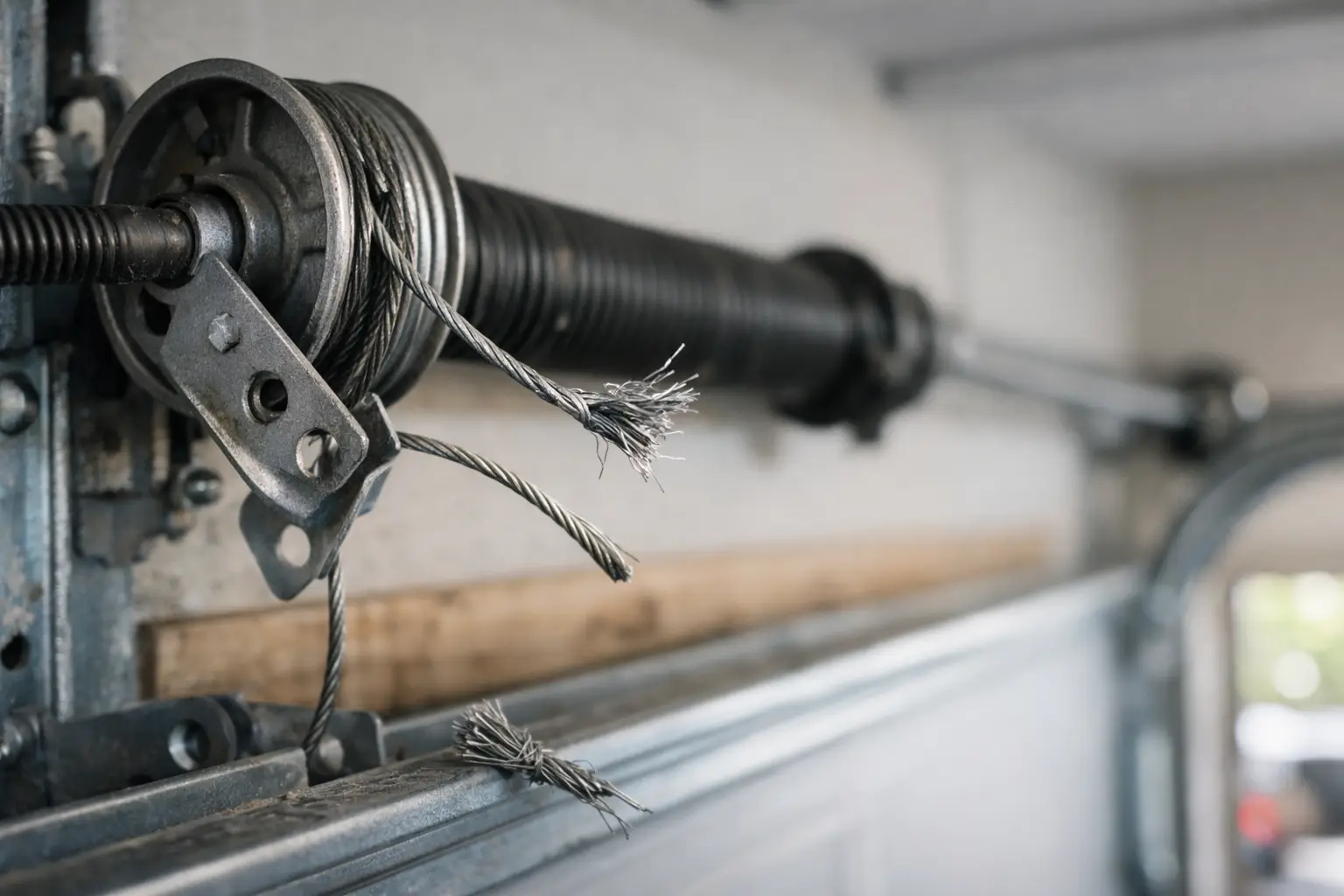
Every time your garage door opens or closes, the cables travel over drums at the top of the door. Over years of use, the small steel strands can rub, flex, and gradually weaken. A cable may begin to look fuzzy or uneven as individual strands break.
Fraying is a clear warning sign. Once several strands have snapped, the remaining strands carry more load and can fail without much notice. If you see loose wire strands near the bottom bracket or cable drum, avoid operating the door until it has been inspected.
Rust and corrosion
Moisture is hard on steel components. Rust can form on cables, drums, bottom brackets, and fasteners, reducing the cable’s strength over time. Coastal air, humidity, water entering below the garage door, or storing wet equipment in the garage can all contribute.
Surface discoloration alone does not always mean immediate failure, but a rusty cable with visible pitting, broken strands, or stiffness should be replaced. During a professional tune-up, a technician can also identify whether the cable is being damaged by a corroded drum or bracket.
A broken or improperly adjusted spring
The springs do most of the lifting. Cables transfer that spring force to the door. When a torsion spring breaks, the door can become unbalanced instantly. One cable may go slack, jump off its drum, or tangle while the door shifts unevenly.
This is one of the most common situations homeowners mistake for a simple cable problem. Reinstalling the cable without addressing the broken spring does not solve the underlying issue. The door needs the correct spring tension and balance before new cables can operate properly.
An improperly adjusted spring can create similar trouble. If the door is too heavy, too light, or rises unevenly, the cables and drums do not share the load evenly. One side may wear much faster than the other.
Cables slipping off the drum
A cable does not have to snap to fail. It can come off the drum, leaving the door crooked or stuck. This usually happens when the door is operated while it is out of balance, a roller comes out of the track, the door hits an obstruction, or a spring breaks.
A cable may also slip if the door was installed or repaired with incorrect tension. The drum must be set precisely, and the cables need to be seated correctly before the door is operated. A door that has one loose cable and one tight cable should not be forced open or closed with the opener.
Bent tracks, damaged rollers, or an off-track door
Garage doors depend on both sides moving together. If a roller binds, a track bends, or a vehicle bumps the door, the door can rack to one side. That uneven movement changes the cable tension and may pull a cable off its drum.
This is particularly common after a door has been hit by a car, bicycle, trash bin, or lawn equipment. Even a minor impact can bend a track enough to affect how the door travels. Continuing to run the opener in that condition can make the repair more involved and can damage panels, hinges, or the opener itself.
Worn drums and bottom brackets
The cable drum has grooves that guide the cable as the door moves. If those grooves are worn, cracked, or damaged, the cable may rub in the wrong place or wind unevenly. At the bottom of the door, the cable attaches to a bottom bracket that is under spring tension. A loose, corroded, or damaged bracket can also affect cable alignment.
These components are easy to overlook because they are not as visible as the door panels or opener. Still, they matter. Quality replacement parts and proper alignment help prevent repeat failures.
Warning Signs to Watch For
Cable issues can escalate quickly, but homeowners often spot early symptoms. Pay attention if your garage door starts moving unevenly, makes grinding or scraping sounds, shakes more than usual, or leaves a gap at one side when closed.
Visible fraying, a dangling cable, a cable wrapped around the shaft, or a door that is crooked in the opening all require prompt service. Another common sign is an opener that hums but cannot lift the door. The opener may be reacting to a broken spring or cable issue, not failing on its own.
Do not assume the opener is the problem and keep pressing the remote. Repeated attempts can strip opener gears, bend the top section of the door, or pull the door farther out of alignment.
What to Do When a Door Cable Fails
A failed garage door cable is not a good DIY project. Cables work alongside springs that store enough force to cause serious injury. The bottom brackets are especially dangerous because they are directly connected to the tensioned cable system.
If the door is partly open, crooked, or off track, keep people, pets, and vehicles clear of the area. Do not pull on the cable, loosen the bottom bracket, or try to force the door down. If it is safe to do so, unplug the opener so no one accidentally operates the door.
If the door is fully closed and secure, leave it closed until a qualified technician can inspect it. If it is open and creating a security or access concern, call for same-day professional help rather than attempting to stabilize it yourself. A technician can secure the door, inspect the springs, drums, tracks, rollers, and brackets, then make the repair based on the full condition of the system.
Preventing Future Cable Problems
No cable lasts forever, but regular service helps you catch wear before it becomes a sudden failure. A yearly garage door inspection is a practical investment for doors used daily, and commercial doors may need more frequent attention because of their higher cycle counts.
Keep the tracks clear of debris and watch for standing water around the bottom of the door. Avoid lubricating the cables themselves, which can collect dirt and hide damage. Instead, use garage-door-approved lubricant on moving metal parts as recommended by a technician, and let a professional handle spring and cable adjustments.
You can also perform a simple visual check once a month. With the door closed, look for frayed cable strands, rust, loose hardware, damaged rollers, or sections that appear misaligned. Then listen as the door operates. A smooth, balanced door should not strain, jerk, or sound like it is fighting its way up the tracks.
For homeowners and property managers across Greater Houston, Ranger Garage Door Repair approaches cable failures with a complete safety inspection and an honest recommendation. Sometimes the solution is a straightforward cable replacement. Other times, the correct repair includes a broken spring, worn rollers, a damaged drum, or track alignment that caused the cable issue in the first place.
A garage door should open smoothly, close securely, and protect the people and property behind it. If yours is showing cable trouble, stop using it and have the system checked before the damage grows. A precise repair now can restore safe operation and help the entire door system last longer.


