
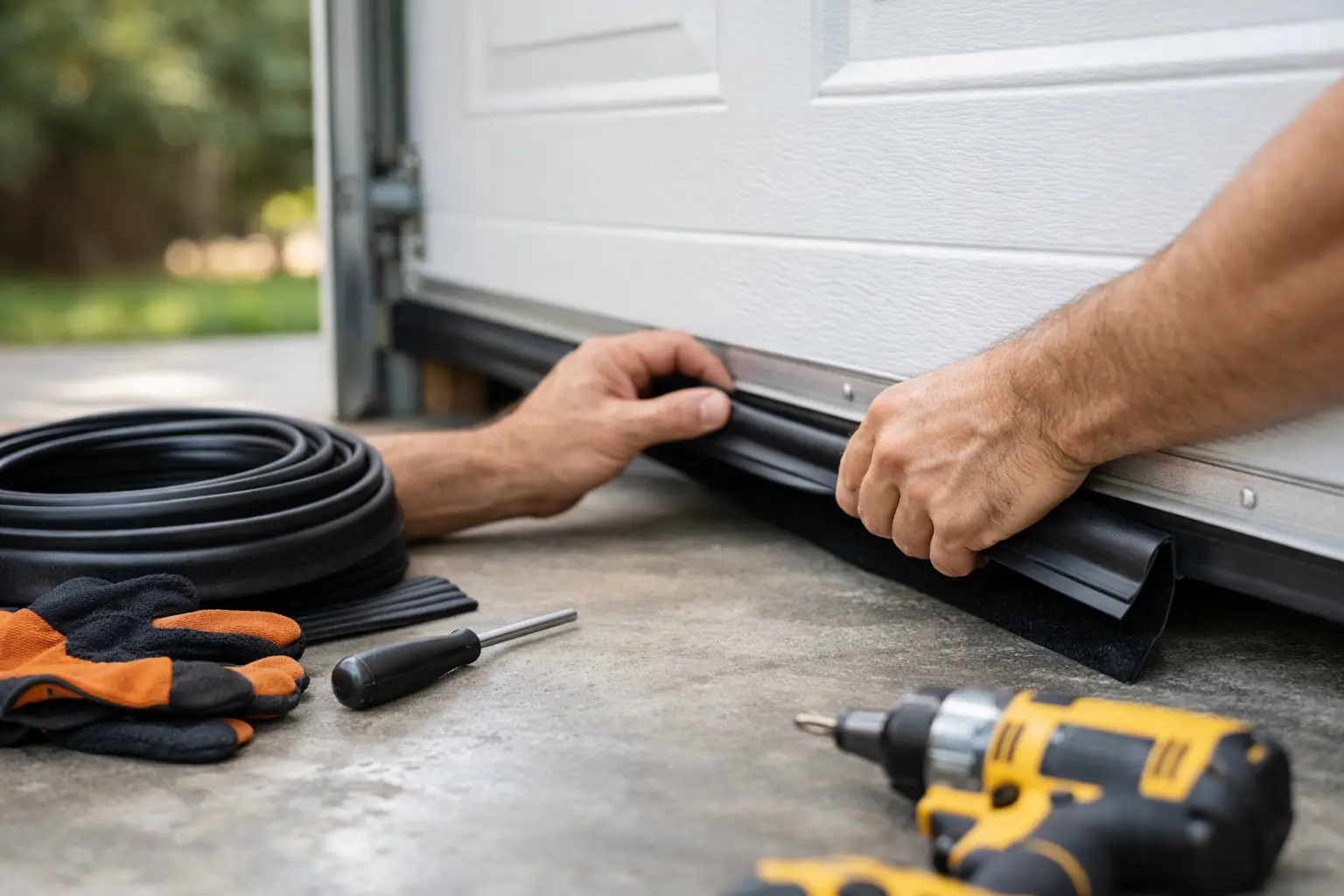
Garage Door Weather Stripping Replacement
A small gap at the bottom of a garage door can create a surprisingly big problem. Garage door weather stripping replacement helps keep out wind-driven rain, humid Houston air, insects, leaves, and the debris that seems to find its way into every garage. It also gives the door a cleaner, more finished seal against the floor and frame.
Weather stripping is not a major mechanical repair, but it deserves more attention than it usually gets. The wrong seal, an uneven installation, or a door that is out of alignment can leave the same gaps behind. A careful inspection helps determine whether the stripping is the real issue or whether the garage door itself needs adjustment.
When Garage Door Weather Stripping Needs Replacement
The bottom seal is the part most homeowners notice first. It is the flexible rubber or vinyl strip attached to the bottom edge of the door. Over time, sunlight, heat, moisture, and normal door movement can make it brittle, flattened, torn, or loose.
Stand inside the garage during daylight hours with the door closed. If you can see a steady line of light under the door, the bottom seal may no longer be doing its job. Small gaps at the corners matter too. They are common entry points for pests and can allow rainwater to blow in during a storm.
Side and top weather stripping can fail as well. This trim-mounted seal runs along the garage door opening and presses lightly against the face of the closed door. When it curls away, cracks, becomes stiff, or pulls loose from the frame, outside air and water can get around the sides of the door.
Other signs are practical rather than visual: damp spots near the garage wall after rain, more dust than usual inside the garage, insect activity near the door, or a noticeable draft near an attached living space. If your garage has a finished workshop, storage area, or an HVAC system nearby, a worn seal can be especially frustrating.
What Weather Stripping Can and Cannot Fix
Good weather stripping helps protect the garage, but it cannot correct every problem at the opening. A bottom seal is designed to flex against minor variations in the concrete. It can close modest gaps caused by a slightly uneven floor. It cannot reliably compensate for a severely sloped slab, a bowed door section, damaged bottom brackets, or a door that does not close level.
That distinction matters. Installing an oversized seal on a door that is crooked can create extra drag and still fail to seal one side. The same is true if the door stops short of the floor because of an opener travel-setting issue. Forcing the opener to push harder is not the answer. Excess closing force can damage the door, strain the opener, and interfere with its safety reversal system.
A professional technician should look at door alignment, track condition, rollers, hinges, bottom brackets, and opener settings before recommending a replacement seal when the gaps are uneven. The best repair is the one that addresses the actual cause, not just the symptom.
Choosing the Right Garage Door Seal
Weather stripping comes in several profiles, and the right choice depends on the door and the condition of the floor. Bottom seals are commonly available in bulb, bead, T-style, and U-shaped designs. The profile must match the bottom retainer attached to the door. A seal that looks similar may not slide into the track correctly or may pull free after a few cycles.
Rubber remains flexible and durable, which makes it a strong choice for many residential doors. Vinyl can be economical and effective, but quality varies. In Houston’s heat, thin or low-grade material may harden, crack, or warp sooner than a premium seal.
For the sides and top, flexible vinyl stop molding is often used. It should make light, consistent contact with the door without pressing so hard that the door rubs or binds. Proper placement is a balance: too loose leaves gaps, while too tight can affect smooth operation and wear the surface of the door.
Color and appearance are also worth considering. A weathered, faded strip can take away from an otherwise well-kept garage door. Matching the trim color or choosing a clean neutral finish can make the opening look more polished, especially on a front-facing garage.
A Careful Approach to Replacement
For a straightforward bottom seal replacement, the door should be fully closed and secured. The old seal is removed from the retainer, the channel is cleaned, and the new seal is fed through the track. A small amount of soapy water can help a tight seal slide into place, depending on the material and retainer style.
The work sounds simple, and sometimes it is. The challenge usually comes from corrosion, bent retainers, seized fasteners, incorrect replacement material, or a door that is no longer sitting evenly on the floor. Cutting the seal too short is another common mistake. It should extend fully to the edges, with the ends positioned to protect the corners.
Side and top seals require accurate placement. The door needs to be closed while the material is positioned so it rests against the door face evenly from top to bottom. If the framing has shifted, the trim is damaged, or the door is not level, replacement may involve more than fastening new weather stripping to the jamb.
Never loosen or remove bottom brackets, cables, or torsion spring hardware to replace a seal. These components are under significant tension and can cause serious injury if handled improperly. A bottom seal should be serviced through the retainer, not by disassembling the garage door’s lifting system.
Houston Weather Makes Maintenance Worthwhile
Greater Houston garages deal with intense summer heat, heavy rain, humidity, and occasional sharp temperature changes. Those conditions are tough on flexible materials. The bottom seal may look acceptable from a distance but still be flattened enough to let water and pests through.
Checking the weather stripping twice a year is a reasonable routine, especially before the wetter parts of the year. Open the door and inspect the bottom seal for splits, flattened sections, and loose ends. With the door closed, look for daylight at the corners and along the sides. Clear leaves, dirt, and small stones from the threshold so the seal can sit properly on the concrete.
Avoid harsh petroleum-based cleaners on rubber and vinyl. Mild soap and water are usually enough to clean the seal and remove grime. If the garage door begins rubbing, dragging, or closing unevenly, do not assume the weather stripping is at fault. That is a good time to have the full door system inspected.
When Professional Service Is the Better Choice
A homeowner can often replace a standard bottom seal when the door is operating smoothly and the existing retainer is in good condition. Professional service makes more sense when gaps are uneven, the retainer is damaged, the door has shifted, water is entering around the sides, or the door has a larger mechanical issue.
It is also a practical choice for commercial doors, oversized doors, and properties where the garage must remain secure and operational. A technician can identify the correct material, set the seal accurately, and verify that the door still opens, closes, and reverses safely.
At Ranger Garage Door Repair, we approach weather stripping as part of the complete garage door system. If a replacement seal is all you need, that is what we recommend. If the inspection reveals an alignment or hardware issue behind the gap, we explain it clearly and provide an honest path forward.
A garage should not become the easiest way for rain, heat, and pests to enter your home. Addressing a worn seal early is a simple way to protect the space, preserve the door’s appearance, and keep small gaps from becoming bigger headaches.


