Signs You Need a New Garage Door Spring — Before It Breaks in Houston Heat
In Houston’s blistering summer heat, garage door springs take on extra stress. The soaring temperatures, humidity, and thermal expansion combine to accelerate wear and tear. Before a spring fails suddenly leaving your garage door stuck, dangerous, or unusable, it’s critical to recognize early warning signs and act proactively.
Why Houston Heat Matters (and Accelerates Spring Wear)
Before signs appear, it helps to understand how a hot climate like Houston can shorten a spring’s life:
- Thermal expansion: Metal springs expand in heat, altering tension and stressing components.
- Heat fatigue: Repeated expansion/contraction cycles degrade the spring’s metal structure over time.
- Corrosion & oxidation: High humidity and occasional rain introduce moisture that can rust the coils, weakening them.
- Lubricant breakdown: In extreme heat, lubricants may degrade faster, leaving springs more exposed to friction.
- Increased use: Garage doors may be used more frequently in summer (for ventilation, coming and going), accelerating cycle count.
Because of these factors, springs in Houston often age faster than in milder regions. A spring rated for, say, 10,000 cycles may start showing signs of decline earlier under this climate stress.
Thus, homeowners should be extra vigilant during and after hot months.
8 Warning Signs That Your Garage Door Spring Needs Replacement
Here are the common cues that your spring is nearing failure (pulled from multiple industry sources). When you see one or more, don’t wait, get a professional assessment.
1. Visible Gaps, Breaks, or Cracks in the Spring Coil
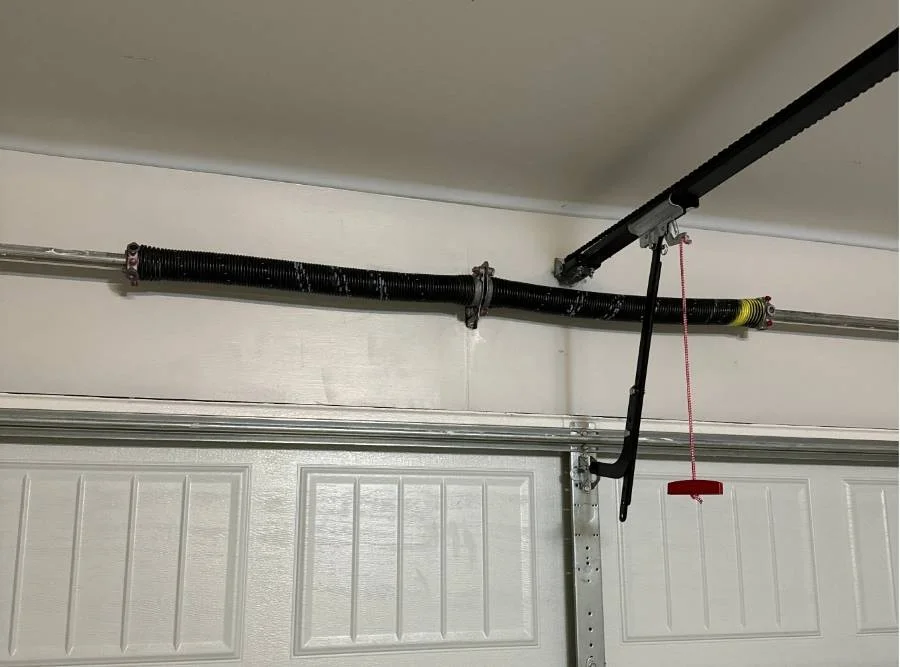
One of the clearest and most serious signs is a visible gap or break in a torsion spring (or elongation in extension springs). When the coil snaps, it creates a gap you can see. Once that happens, the spring has lost structural integrity.
If you spot even a small crack or gap, stop using the door and call for immediate replacement.
2. Rust, Corrosion, or Pitting on the Coils
Rust is more than cosmetic, it eats away at metal and weakens spring strength. You may see discoloration, rough texture, or flaking. Over time, these corroded areas become stress points prone to breakage.
In Houston’s humid climate, corrosion risk is a real concern, so regular inspection is key.
3. Door Feels Heavy or Resists Opening
A healthy spring should counterbalance your door so that it lifts smoothly (even if manually, with the opener disengaged). If the door suddenly feels heavier, or the opener strains or fails to lift it, that’s a sign the spring is weakening.
Don’t push through, use of a failing spring can damage other parts (opener motor, cables).
4. The Door Won’t Stay Open / Falls Too Fast
One role of a spring is to hold the door in place partway through travel. If the door drops instead of staying halfway, or closes unnaturally fast, the spring probably has lost enough tension that it can’t control the weight.
This is a safety risk, if the door slams down, it could damage property or injure someone.
5. Uneven / Asymmetric Movement
If one side of the door is rising or falling faster than the other, or the door tilts, it suggests uneven spring tension, or one spring weakening more than its counterpart.
This imbalance causes stress on cables, tracks, and hardware.
6. Loud Noises: Popping, Creaking, or Twanging
When springs age and metal fatigues, you may hear audible sounds pops, creaks, bangs during door operation. These noises often precede failure.
A sudden sharp snap in a garage often marks a full spring break.
7. Excessive Wear in Cables, Drums or Pulleys
Wear in cables, uneven wrapping on drums, or metal fatigue in pulleys can indicate the spring is misbehaving, overworking to compensate.
Addressing spring issues early can prevent collateral damage.
8. Age / High Cycle Count
Even if everything seems fine, springs have a theoretical life expectancy. Many torsion springs are rated for 10,000 cycles; heavy use or harsh climates can cut that significantly. If your springs have been in service many years (especially under high use), replacement is wise before a sudden failure.
Better to replace preemptively than wait for a failure.
What to Do When You See Warning Signs (Don’t Wait)
Once signs emerge, here’s what the homeowner should do:
- Stop using the door (disconnect opener, avoid further stress).
- Disconnect the opener (emergency release) to avoid motor strain.
- Secure the door manually (if safe) to prevent collapse.
- Call a qualified technician—spring replacement is dangerous and requires proper tools and safety skills.
- Replace both springs (if applicable)—especially if one is failing, the paired spring is likely worn, too.
- Lubricate new springs properly, protect from corrosion.
- After replacement, test balance, alignment, and safety mechanisms.
Never attempt to adjust or replace springs yourself unless you are trained and have the right tools, mistakes with high-tension springs can be hazardous.
Why Acting Early Saves Money & Risk
Catching early warning signs of wear can prevent a sudden spring break that damages the door, opener, cables, or tracks. Acting quickly also helps you avoid emergency service costs and unexpected downtime, while reducing the risk of injury or property damage. Routine care keeps your garage door running smoothly, extends the lifespan of key parts, and minimizes stress on the system especially during Houston’s intense summer heat, when components are more prone to failure. Because spring breaks are often abrupt and dangerous, spotting issues early is the safest and most cost-effective way to protect both your home and your budget.
Local Houston / Climate Considerations & Tips
Houston’s heat and humidity put extra stress on garage door springs, making frequent inspections essential. After extreme heat waves, recheck your springs—thermal expansion and contraction can push already worn springs to failure. It’s wise to inspect them more often during summer or after prolonged hot spells.
Choose corrosion-resistant springs such as galvanized or weather-treated steel to withstand Houston’s humid conditions. Regularly lubricate with a high-quality silicone or lithium-based spring lubricant to minimize heat and moisture damage. If your springs are nearing the end of their lifespan, schedule a proactive replacement during a moderate season, rather than waiting for peak summer heat when failures are more likely and service demand is higher.
Keep Your Garage Door Safe in the Houston Heat
In Houston’s punishing heat, waiting until your garage door spring breaks is a risky gamble. Recognizing these 8 warning signs, visible damage, rust, heaviness, uneven motion, noises, imbalance, worn parts, and age gives you the foresight to replace the spring before disaster strikes.
If you detect any of these signs, don’t delay, reach out for a professional spring replacement. At Ranger, our technicians specialize in diagnosing spring fatigue, matching correct replacement springs, and executing safe, accurate installations to keep your door reliable, balanced, and safe through every Houston summer. Let us help you stay ahead of spring failure rather than suffering through the consequences.


